
Tingling extremities, abdominal pain, and nausea were symptoms that stopped me in my tracks. The catch is, my husband was complaining of these symptoms, not me. He’s a relatively healthy guy, but he does have high cholesterol and glucose numbers that place him into the “almost” diabetic category. Listening to him describe these symptoms, the only thing I could say was, “We’re going to the emergency room.” He denied it was anything serious and mumbled he just wanted to rest. I’m not a doctor or a nurse, but I knew if he was having a heart attack, we didn’t have precious minutes to sit and rest. I gathered up a few things and shoved him out the door. When the emergency room doctor questioned my husband about his symptoms and his health history, he couldn’t remember exact dates or details. That’s when I jumped into the conversation, since I had most of the answers in the binder on my lap. Thankfully, one of the items I thought to bring from home was my husband’s health binder. Documentation of his medications and corresponding dosages, recent lab reports, date and results of his last physical, and names of specialists he’d seen were all neatly filed away in this binder. Okay, maybe not neatly, but nonetheless, filed.
The visit to the emergency room revealed two things: First, my husband has a sound heart. Second, having his health information at our fingertips saved valuable time and reduced the stress of having to accurately recall pertinent information from memory at a critical time. With that said, I can’t emphasize enough the importance of organized medical records.
Request copies of reports each time you have a procedure done. All lab work, diagnostic exams, pathology reports, test results, hospital visits, and other significant documents should be filed. Save copies of referral slips and prescription information. Bring immunization cards to physicals for updates. You think you’ll never forget certain dates or physical conditions you’ve had, but you will. Even though your doctor has everything documented in your patient chart at his office, he may not be around if there’s an emergency.
There are many ways to approach this type of project, but the following way seems to me to be the easiest method to organize and access the information:
1. Purchase a binder for each member of the family and label it with his/her name.
2. Purchase binder dividers with tabs. You might need a dozen per family member; usually younger family members need fewer dividers, because they see fewer specialists. Label the tabs with the following categories and file documents with most recent on top:
Diagnostics – Any diagnostic report such as x-rays, mammograms, scans, MRIs, CTs, ultrasounds, biopsy and pathology reports, etc.
Health History – All documents from previous doctors. Each time you change physicians, get copies of your records. You may have to pay to have copies made, but it’s well worth it.
Labs – All lab work reports go here.
Immunizations – Immunization cards, TB test results, flu shot records, vaccine information, etc.
Name of Your Primary Care Physician – Under my PCP’s divider, I keep notes I make while in his office. If I’ve asked questions and written down his answers, I file that paper. I also keep a copy of any patient information forms I’ve filled out or signed.
Specialists – Each specialist you see should have his own divider. Examples of specialist dividers might be: ob-gyn, dermatology, cardiology, physical therapy, allergy, podiatry, endocrinology, and gastroenterology.
Prescriptions – File prescription information forms you receive from the pharmacy. Besides the name of the medication, these forms should include dose, instructions, and side effects. If you’ve been on a medication for years, always keep the first form received and the most current form in your binder. That way you’ll know how long you’ve been on any particular medication.
Vision and Dental – These categories are optional for inclusion.
For health’s sake, get organized!
 Always on the lookout for healthy recipes, I found several interesting ones that use quinoa. Quinoa, which is pronounced KEEN-WAH, is a tiny Peruvian seed. Although it resembles couscous and can be served like rice, it is far more nutritious than either; quinoa is packed with all the essential amino acids. I saw this recipe by Martha Rose Shulman last year and have made this tasty and nutritious dish several times. Of course, like everything else I do, I had to tweak it a bit. Attractive mounded on a bed of leafy greens, it serves about six.
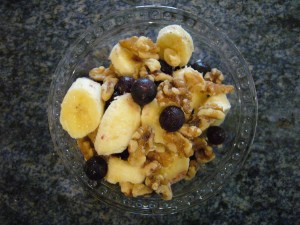 It’s kind of ego-deflating, but my most requested recipe is not for cookies or Chinese dishes, but it’s for my breakfast oatmeal. I always loved it when my mom served me a bowl of hot oatmeal for breakfast. As a child I would look into my bowl and watch little specks of liquid gold (melted butter) float in pools of rich milk that surrounded islands of oats. Decades now, I can still taste the wonderful goodness of hot oatmeal. Of course I can, because I have eaten it everyday for breakfast for the last two years! The catch is my mom gave me something else besides oatmeal. She gave me a genetic propensity for developing high cholesterol. My mom’s a tiny little thing, but her cholesterol numbers are big time. She once had her blood drawn and it looked like milk. The genetic link is strong. My siblings carefully watch their cholesterol and my daughter was diagnosed with high cholesterol at the tender age of five.
 What about this?
You must be logged in to post a comment.