Feeds:
Posts
Comments

Archive for the ‘Pets’ Category

As I sat at my computer working on today’s post, I could hear Romeo, my twelve-and-a-half-year-old Cockapoo, snoring under the desk. At first glance, one would think he is much younger. His blond curly coat and his small dog attitude belie his age. But upon closer observation, Romeo’s old, soulful eyes and stiff back legs reveal the truth. He is really a mellow old guy now and is such a joy to have around. With that thought in mind, I wondered if I were to see an old dog like Romeo in a shelter, would I adopt him or would I want a younger, more spry puppy? Would would you do?

#1 – Senior Dogs
Check out the Senior Dogs Project, a site dedicated to “Looking Out for Older Dogs.” Learn about the joys of adopting or fostering an older dog. According to the website, the top ten reasons to adopt a senior dog are:

1. House-trained
2. Won’t chew inappropriate items
3. Focuses well
4. Knows what “no” means
5. Settles in with the “pack”
6. Good at giving love
7. What you see is what you get
8. Instant companion
9. Time for yourself
10. Get a good night’s sleep

Another site dedicated to senior dog rescue is Muttville.

#2 – Dalai Lama’s 18 Rules for Living
No matter your age, these rules for living are worth remembering.

1. Take into account that great love and great achievements involve great risk.

2. When you lose, don’t lose the lesson.

3. Follow the three Rs:
a. Respect for self
b. Respect for others
c. Responsibility for all your actions.

4. Remember that not getting what you want is sometimes a wonderful stroke of luck.

5. Learn the rules so you know how to break them properly.

6. Don’t let a little dispute injure a great friendship.

7. When you realize you’ve made a mistake, take immediate steps to correct it.

8. Spend some time alone every day.

9. Open your arms to change, but don’t let go of your values.

10. Remember that silence is sometimes the best answer.

11. Live a good, honourable life. Then when you get older and think back, you’ll be able to enjoy it a second time.

12. A loving atmosphere in your home is the foundation for your life.

13. In disagreements with loved ones, deal only with the current situation. Don’t bring up the past.

14. Share your knowledge. It’s a way to achieve immortality.

15. Be gentle with the earth.

16. Once a year, go someplace you’ve never been before.

17. Remember that the best relationship is one in which your love for each other exceeds your need for each other.

18. Judge your success by what you had to give up in order to get it.

#3 – Reuse It

If you have multiple electrical cords and plugs under your desk or elsewhere in your house, and you don’t have a clue which appliances they belong to, here’s a helpful tip for you. Instead of throwing away those little, square, plastic clips on bread bags that have product dates stamped on them, use them to help identify the plugs. On the unstamped side of the plastic clips, indicate (with a permanent ink marker or label) where the cord originates – computer, printer, toaster, lamp, sewing machine, etc. and you’ll always know which device you’re unplugging!

#4 – Real Love Photo
Photographs can often reveal a depth and breadth of emotion that words cannot do justice. This particular photo by Anze Malovrh was one of those types of photos and it tugged at my heartstrings.

#5 – Born to Stand Out
“Why fit in when you were born to stand out?”
— Dr. Seuss

Enjoy this last weekend in September!

Note: The portrait of Romeo was taken by my son Adam.

Read Full Post »

July is almost gone now, but it was a month filled with the highs and lows of life. Milestone birthdays of 80, 83, and 88 years were joyously celebrated, but tempered with sad news from friends. July brought the reminder that life is to always be appreciated and celebrated.

#1 – Artistic Skylines
Lately I seem to be posting links to series of photos taken around the world, and, although I promised myself I would not do it this week, I am again linking to another series of photos. It features artistic skylines created out of a myriad of materials. Ever consider Jello as a building block before? Sorry, I find these types of things interesting!

#2 – Anyway the Wind Blows
Every year at about this time, I take a close look at the ceiling fans in my home to see which way they are rotating. In the summer, ceiling fans should rotate in a direction that pushes the air downward. The fan blades should spin with the leading edge up and you should be able to feel this downward air flow by standing underneath it. For most, but not all fans, this means a counter-clockwise rotation.

#3 – Good to Know
My local newspaper featured an article about poison control that had some good-to-know information. The most important bit of information is the phone number for the state’s (California) poison control hotline: (800) 222-1222. “It’s staffed around the clock, including holidays, and language interpreters are available.”

#4 – Lesson Learned
Another recent article in my local newspaper brought back memories for me. I wrote a post in April called What Not to Feed Your Pet and I thought it was a pretty comprehensive list, but the newspaper article listed a category that I had not included in mine. How could I have forgotten this one category?! One day when my little Romeo was just a pup, I came in from gardening and removed my shoes and thin nylon socks. I was reading the newspaper when I heard one of my sons say, “Mom, Romeo is sniffing your socks.” I continued reading the newspaper and calmly said, “Okay, keep an eye on him.” A split second later my son yelled out, “Mom, Romeo just ate your sock!” Well, my little dog was lucky that he didn’t need abdominal surgery, but boy was he a pathetic little thing after the veterinarian forced him to swallow charcoal and throw up the sock.

This is what the newspaper article says:
Socks, underwear and nylons: Unsafe. Keep laundry picked up and in hampers, and always watch what your dog has in her mouth – especially during the chew-everything stages of growing up.

Lesson learned for all of us that day. Please add socks, underwear and nylons to my What Not to Feed Your Pet list. It might save you some money on vet bills, but more importantly, it might save your pet’s life.

#5 – Part of Our Lives
“Dogs are not our whole lives, but they make our lives whole.”
Roger Carras

Today is a great day – it’s my dad’s birthday! Happy Birthday, Dad! I love you!

Have a great weekend everyone!

Read Full Post »


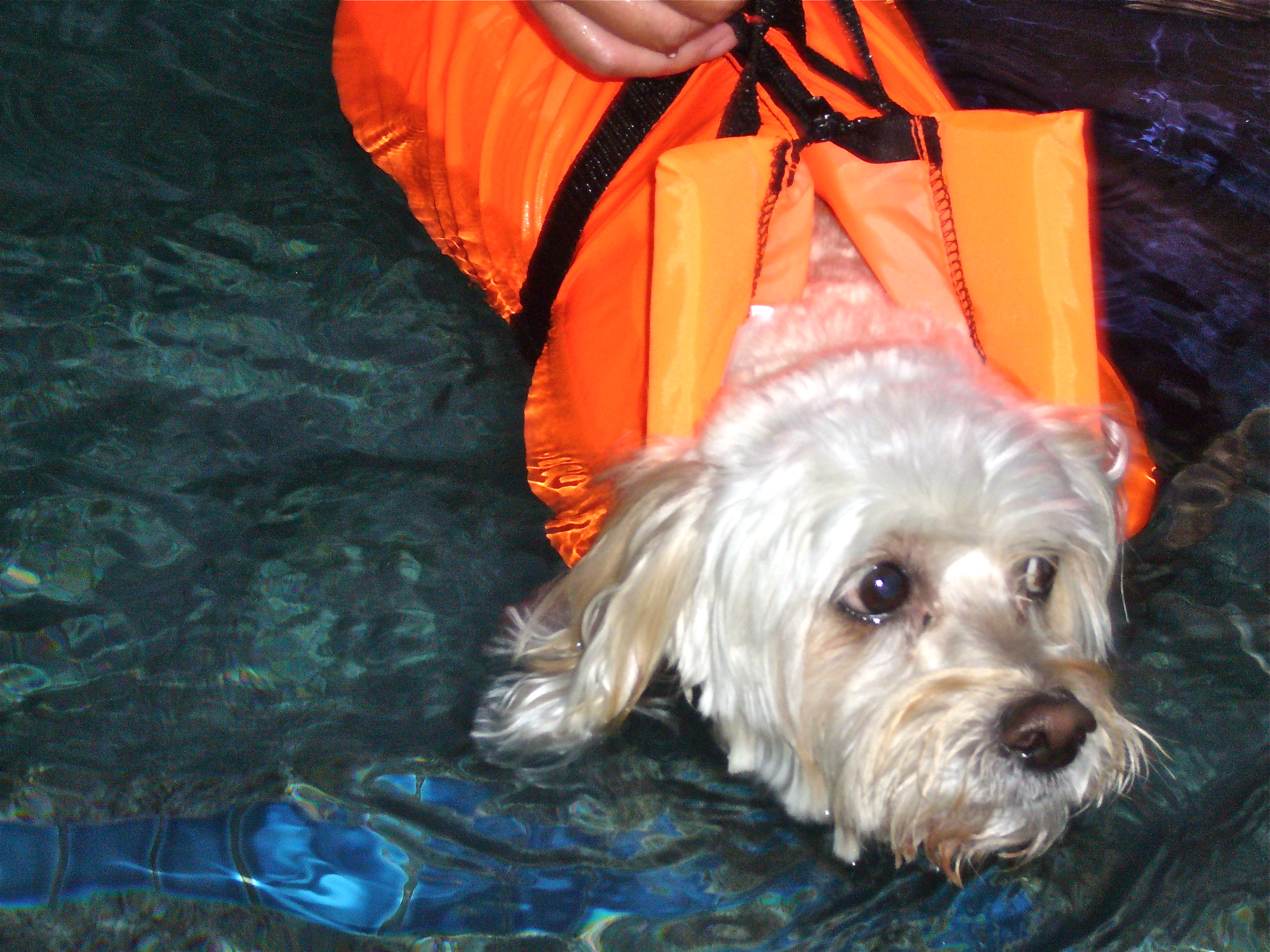
Fourth of July weekend usually means patriotism, fireworks, barbecues, picnics, and cooling down in some form of water. No matter what you do for your holiday weekend, please take necessary precautions and be safe! Wear sunscreen and hats, store picnic food at safe temperatures, and if you are going to a lake, river, or beach don’t forget to pack life vests! My little dog wears his life vest when he swims in my pool. He’s had two surgeries to repair torn ACLs, so he begrudgingly dog paddles to rehabilitate his knees and stave off arthritis.

#1 -Independence Day Trivia
Here’s a sampling of Fourth of July trivia questions from Starpress.com and a few I threw in to keep you are on your toes:

Q: July 4 celebrates the passage of what important document?
A: Declaration of Independence

Q: What is the name of the group that passed the Declaration of Independence and when?
A: Continental Congress on July 4, 1776.

Q: Who wrote the Declaration of Independence?
A: Thomas Jefferson was the primary writer. Roger Sherman, Benjamin Franklin, Robert Livingstone and John Adams also were members of the committee charged with writing the Declaration of Independence and revisions.

Q: By what title did the Continental Congress call the Declaration of Independence?
A: The Unanimous Declaration of the Thirteen United States of America.

Q: How many people signed the Declaration of Independence on July 4, 1776?
A: Two

Q: How many signatures are on the Declaration of Independence?
A: 56

Q: The first 10 Amendments to the Constitution are familiarly known as?
A: The Bill of Rights

Q: What do the colors on the flag stand for?
A: There is no record stating why red, white, and blue where chosen for the flag.

Q: The dollar amount of all U.S. fireworks imported?
A: $211 million

Q: Estimated number of Fourth of July cookouts?
A: 150 million

#2 – Picnic Safety Tips
If you’re planning a picnic this Fourth of July, take care that you’re following these safety tips as provided in an article by whatscookinginamerica.net. Click on the link to read the entire article, otherwise here’s a synopsis:

A. As always, wash hands and work areas before preparing food.

B. Cook foods in plenty of time to thoroughly chill them in shallow containers in the refrigerator.

C. Have enough coolers with ice or frozen gel packs and pack foods right from the refrigerator into the coolers.

D. Don’t put the cooler in the car trunk; Carry it inside an air-conditioned car. At picnics, keep the cooler in the shade and keep the lid closed. Replenish the ice if it melts.

E. Use a separate cooler for drinks so the one containing the food won’t constantly be opened and closed.

F. Find out if there’s a source of safe drinking water at your destination. If not, bring water for preparation and cleaning; or pack clean, wet, disposable cloths or moist towelettes and paper towels for cleaning hands and surfaces. Cross-contamination during preparation, grilling, and serving food is a prime cause of food borne illness.

G. Pack raw meats, poultry, or seafood on the bottom of the cooler.

H. If you plan on getting takeout foods such as fried chicken, eat them within an hour of pick up.

I. Do not partially grill extra meat or poultry to use later.

J. Don’t put the cooked items on the same platter which held the raw meat.

K. Two Hour Rule. Don’t leave perishable food un-refrigerated for more than two hours.

L. Discard leftovers.

#3 – Patriotic Flower Pots
Buy red, white, or blue flower pots and plant them with red geraniums, blue salvia, and white petunias or any other combination of red, white, and blue summer annuals. Purchase some patriotic-colored, wide, wired ribbon at your local crafts store. Plant the flowers, tie the ribbon in a bow at the front of the pot, and place pots wherever you need a pop of patriotic color that will last all summer long.

#4 – Patriotic Drink
The secret to creating a red, white, and blue multilayered drink is finding beverages with different sugar contents, so says an article in Disney Family Fun. Beverages with more sugar, like fruit juices, are denser and are poured first. The second layer the article suggests would be something like an athletic beverage and the top layer, which would have the least amount of sugar, would be a diet drink. The following recipe from the article is for a children’s patriotic drink, but think of all the possibilities for adult drinks!

Ingredients:
Ice cubes
Cranberry juice
Wild Berry flavor Gatorade Fierce
Diet 7-Up

Instructions:
1. Fill a clear glass with ice cubes. Pour the drink with the most sugar (check the nutrition label) into the glass. For our red, white, and blue recipe, start with the cranberry juice.
2. Very slowly add a beverage that contains less sugar — in this case, Wild Berry flavor Gatorade Fierce. Be careful to pour it onto an ice cube — not directly into the other drink — to keep them from mixing.
3. Use the same technique to add a layer of Diet 7-Up.

#5 – Freedom
Freedom has its life in the hearts, the actions, the spirit of men and so it must be daily earned and refreshed – else like a flower cut from its life-giving roots, it will wither and die.
Dwight D. Eisenhower

Have a happy and safe Fourth of July weekend!

Read Full Post »


With the temperatures warming up outside, it’s time to put on the sunscreen, drag out those tattered garden gloves, and sharpen those rusty shears. Picture how good it’s going to feel to reestablish those short sleeve and ankle sock tan lines while working up a sweat in the yard! Yeah, well maybe not today. Just got an iPad an hour ago and it’s redirecting my best intentions!

#1 – Time to Plant!
It’s that time of the year again when little vegetable plants nod in the breeze as we walk by them in the garden center. It can be confusing to know when the best time is to plant each type of vegetable, but The Garden Helper can help answer those types of questions. This site has a vegetable planting guide and tons of growing tips that are helpful to novice gardeners and experienced ones, as well. For someone like me, who could not live off the fat of the land, every little bit of advice helps!

#2 – Poisonous Plants
Last week I addressed foods that your pets should not eat. This week I’m focusing on plants that are potentially poisonous to your pets, cats and dogs specifically. The Humane Society of the United States has an extensive list that you can download as a PDF. Review the complete list so that you are familiar with plants in your yard that could be a potential problem. Here’s a short list of a few that are more commonly found in yards:

Azaleas – entire plant
Bird of Paradise – pods
Caladium – entire plant
Carolina Jessamine – flowers, leaves
Common Privet – leaves, berries
Daffodil – bulbs
Daphne – bark, berries, leaves
Day Lily & Easter Lily – entire plant is toxic to cats
Delphinium – entire plant, especially sprouts
English Ivy – entire plant especially leaves and berries
Foxglove – leaves
Iris – leaves, roots
Lantana – foliage
Laurels – leaves
Lupines – seeds, pods
Morning Glory – seeds, roots
Narcissus – bulbs
Oaks – shoots, leaves
Oleander – leaves
Philodendron – entire plant
Rhododendron – leaves
Sago Palm – entire plant, especially the seeds
Wisteria – pods, seeds

#3 – Eating at McDonald’s Around the World
My daughter recently told me about some meat-flavored potato chips she had in Egypt. That reminded me of this site which features McDonald’s cuisine from around the world. It’s interesting to see how McDonald’s caters to the local crowds.

#4 – The Snail’s Drink of Choice
I was reading a gardening article in my local newspaper and learned a few things about snails I had not known before. Did you know that snails can devour 30-40 times their weight, that they are hermaphrodites and thus can impregnate themselves or their partners, and last, but not least, that they love to drink beer? It seems snails are attracted to the yeast in beer, so go ahead and put out some shallow pans of beer so that those little guys can drown their troubles. But, beware, if you put out the wrong kind, they may not take the bait. According to research done at Colorado State University, snails tend to favor Kingsbury Malt, Budweiser, Bud Light, and Old Milwaukee brands. Light beer? Snails watch their weight?

#5 -Has Your Soul Bloomed, Yet?
If you’ve never been thrilled to the very edges of your soul by a flower in spring bloom, maybe your soul has never been in bloom.  ~Terri Guillemets

Today’s the last day of April which means tomorrow is May Day! Go ahead and dance around the maypole if you feel like it! Enjoy your weekend!

Read Full Post »

There was something strange in my dog’s food bowl. I stooped down low to get a good look at the light-colored, smooth-looking substance. It was Swiss cheese and I knew exactly who had given it to the dog! I quickly went into my pantry, grabbed a yellowing newspaper clipping that I had cut out and posted on the pantry bulletin board years ago, and showed the “Never Feed Your Pet . . ” article to my husband. My husband loves our little Romeo so much that he forgets Romeo is a dog and he lovingly feeds Romeo scraps of human food. This obviously is not the first time I’ve had this conversation with my husband and I’m not sure what it’s going to take, other than Romeo developing an extreme illness, to really get my husband’s attention. It was a good thing Romeo was smart enough (this time) to know better than to eat the cheese.

To all pet owners, if you really love your pets, please be aware that your “loving ways” could be harming them. Below is a list I recently compiled to help refresh my family members as to the items that should not be fed to dogs and/or cats. Each category heading is followed by a D, a C, or by both to denote whether the item is harmful to dogs, cats, or both. This list is only meant to be a helpful reminder. Your veterinarian should be consulted with any questions regarding what your pet should or should not eat.

Lastly, if your pet has ingested any of the items on this list, call your veterinarian, an emergency animal clinic, or the ASPCA Animal Poison Control Center. The number for the Animal Poison Control Center is (888) 426-4435. It is manned 24/7 and a consultation fee can be charged to your credit card. I called this number a few years ago, because my dog managed to unzip my daughter’s purse and ingest six sticks of sugar free gum. Needless to say, we make sure the chewing gum in our house does not contains Xylitol.

HARMFUL TO YOUR PETS
Alcohol (D & C)
Alcoholic drinks and food made with alcohol should be avoided. The harmful effects range from vomiting and diarrhea to death.

Apples, Apricots, Cherries, Peaches and Plum (D, C?)
These fruit contain a type of cyanide compound that can poison your dog if he eats enough of the stems, seeds and leaves. This can result in dilated pupils, breathing difficulties, hyperventilation, and shock. Pits from peaches, plum, and apricots can also cause obstruction of the digestive tract.

Avocado (D & C)
Avocados contain a substance called Persin which is highly toxic in most animals. Just a little can cause your pet to vomit and have diarrhea. In addition, if you grow avocados at home, keep your dog away from the plants. Persin is in the leaves, seed, and bark, as well as in the fruit.

Baby Food (D & C)
It can contain onion powder, which can be toxic to dogs and cats. (Please see onion listing below). Consumption of baby food can also result in nutritional deficiencies, if fed in large amounts.

Bones From Fish, Poultry, or Other Meat Sources (D & C)
Bones can cause obstruction or laceration of the digestive system. Bones can also cause tooth fracture.

Canned Tuna (C)
Large amounts of tuna (for human consumption) can cause malnutrition, since it lacks proper levels of vitamins and minerals.

Cantaloupe (C)
Cantaloupe can lead to kidney failure for cats that ingest it.

Cat Food (D)
It’s generally too high in protein and fats for dogs.

Chocolate, Coffee, Tea, and Other Caffeine (D & C)
These contain caffeine, theobromine, or theophylline, which can be toxic and affect the heart and nervous systems. Dark chocolate is more dangerous than white chocolate.

Citrus Oil Extracts (D & C)
Items containing these can cause vomiting.

Corn on the Cob (D)
Ingesting one of these is one of the most common ways a dog can get a blocked intestine. The dog bites off a piece, swallows it, and the cob blocks the small intestine. This can kill a dog if it’s not removed surgically.

Dog Food (C)
Generally this is not a problem if small amounts are ingested, but if fed repeatedly, it may result in malnutrition and diseases affecting the heart .

Fatty Foods and Fat Trimmings (D & C)
Excessive amounts of fatty foods can cause pancreatitis. Pancreatitis signs include abdominal pain, acute onset of vomiting, and diarrhea. The pain can show through a hunched posture when you pick up your pet.

Miniature and toy poodles, cocker spaniels and miniature schnauzers are especially prone to pancreatitis.

Grapes and Raisins (D & C)
They contain an unknown toxin, which can damage the kidneys. There have been no problems associated with grape seed extract.

Ham (D & C)
Ham and other salty meats and foods are very dangerous to pets. In addition to being high in fat, they are also very salty which can cause serious stomach ache or pancreatitis. Also, large breeds of dogs that eat salty food may drink too much water and develop a life-threatening condition called “bloat.” This is where the stomach fills up with gas and within several hours may twist, causing the pet to die.

Hops (D, C?)
An unknown compound causes panting, increased heart rate, elevated temperature, seizures, and death.

Human Vitamin Supplements Containing Iron (D & C)
Vitamin supplements containing iron can damage the lining of the digestive system and be toxic to the other organs including the liver and kidneys.

Kitchen Pantry Items (D & C)
Many other items commonly found on kitchen shelves can harm your pet. Baking powder and baking soda are both highly toxic and so are nutmeg and other spices. Keep food items out of your pet’s reach and keep pantry doors shut.

Liver (D & C)
In large amounts liver can cause Vitamin A toxicity, which affects muscles and bones.

Macadamia Nuts (D & C)
These nuts contain an unknown toxin, which can affect the digestive and nervous systems and muscle. They can cause a wide range of symptoms – from depression to tremors to hyperthermia.

Marijuana (D & C)
Marijuana can depress the nervous system and cause vomiting and changes in the heart rate.

Milk and Other Dairy Products (D & C)
Some adult dogs and cats do not have sufficient amounts of the enzyme lactase, which breaks down the lactose in milk. This can result in diarrhea. Lactose-free milk products are available for pets.

Moldy or Spoiled Food & Garbage (D & C)
These items can contain multiple toxins causing vomiting and diarrhea and can also affect other organs. In bigger doses, they can cause seizures, coma, or even death.

Mushrooms (D & C)
Mushrooms can contain toxins, which may affect multiple systems in the body, cause shock, and result in death.

Onions and Garlic & Chives (D & C)
Raw, cooked, or powdered onions and garlic contain sulfoxides and disulfides, which can damage red blood cells and cause anemia. Cats are more susceptible than dogs. Garlic is less toxic than onions.

Persimmons (D & C)
Persimmon seeds can cause intestinal obstruction and enteritis.

Potato, Rhubarb, and Tomato Leaves; Potato and Tomato Stems (D & C)
These plants contain oxalates, which can affect the digestive, nervous, and urinary systems. This is more of a problem in livestock, but tomatoes can cause gastrointestinal upset in cats.

Raw Eggs (D & C)
Raw eggs contain an enzyme called avidin, which decreases the absorption of biotin (a B vitamin). This can lead to skin and hair coat problems. Raw eggs may also contain Salmonella.

Raw Meat and Raw Fish (D & C)
Raw meat and raw fish, like raw eggs, can contain bacteria that cause food poisoning. In addition, certain kinds of fish such as salmon, trout, shad, or sturgeon can contain a parasite that causes “fish disease.” If not treated, the disease can be fatal within 2 weeks. The first signs of illness are vomiting, fever, and big lymph nodes. Thoroughly cooking the fish will kill the parasite and protect your pet. Ingestion can result in a thiamine (a B vitamin) deficiency leading to loss of appetite, seizures, and in severe cases, death. More common if raw fish is fed regularly.

Salt (D & C)
If eaten in large quantities it may lead to electrolyte imbalances. There’s also such a thing as sodium poisoning.

String (D & C)
String or ribbon can become trapped in the digestive system.

Sugary Foods (D & C)
Sweets can lead to obesity, dental problems, and possibly diabetes mellitus.

Tobacco (D & C)
Tobacco contains nicotine, which affects the digestive and nervous systems. Ingestion can result in rapid heartbeat, collapse, coma, and death.

Yeast Dough (D & C)
Yeast dough can expand and produce gas in the digestive system, causing pain and possible rupture of the stomach or intestines.

Your Medicine (D & C)
Reaction to a drug commonly prescribed for humans is the most common cause of poisoning in dogs. Keep all medicines out of your dog’s reach. And, never give your pet any over-the-counter medicine unless told to do so by your vet. Ingredients such as acetaminophen or ibuprofen are common in pain relievers and cold medicine but, they can be deadly for your pet.

Xylitol (D & C)
Xylitol, an artificial sweetener, can be found in gum, candy, baked goods and toothpaste. It can cause liver failure.

To compile this list I scoured the internet for information. Here are some of the helpful sites I found:
aspca.com
peteducation.com
pets.webmd.com
http://www.wikihow.com
stluciaanimals.org
oceanviewanimalhospital.com

Read Full Post »

Rsleeping_1

Most days I sit at my computer and keyboard one-handed. It’s taken me years of diligent daily training to reach my current level of proficiency with each individual hand. My right-hand is deft, but my left is almost as good. I know what you’re thinking. Why on earth would anyone train themselves to type with one hand?

More than a decade ago my family decided to adopt a puppy. It took seven years, four hamsters, and about five Betta fish before we were ready to fill the huge emotional void that the death of our dog Pippin left. Any dog following in Pippin’s paw prints was going to have to be extraordinary. The search was on. Breeders were contacted, classifieds were scoured, and puppies were cuddled, but none seemed to be the “it” dog. Finally after months of searching, a cock-a-poo breeder forty miles away called me. Her dog Chloe was due to have a litter soon. Having pick of the litter was a new experience for my family and we impatiently waited for the breeder’s call. The call finally came a few days after Christmas, “One little boy and three little girls,” she said.

A mother’s demeanor can be a good indicator of what her children’s temperament might be like. These were the words of a veterinarian, not a child psychologist, although they’re probably not far from the truth as far as humans go, too. If that statement were true, then all four of Chloe’s puppies were sure to be little angels.

The breeder was aware of our preference for a female and preferably a tea cup-sized one at that. We knew our decision was not going to be an easy one, but after multiple visits to the puppies, one little personality stood out. The adorable females had lovely dark coats, but it was the lone buff-colored male, nicknamed Brutus by the breeder, that caught our attention. Brutus was so named, because he was the largest of the litter and because he clumsily climbed over his little sisters to find the most abundant source of milk. How could we not fall in love with the little one who was born with a double chin, who played tug-of-war with artificial plants, and who did such ferocious kick backs that he’d kick his poop right off the piddle pad? Our decision was made. So much for the little tea cup-sized female, Brutus aka Romeo was ours.

The moment we brought Romeo home we started training him to ring a bell that hung from a family room door and opened to our backyard. Our intention was to train him to let us know when he needed to use the outdoor facilities. In hindsight, Romeo really trained us right from the start. That clever pup quickly learned if I ring it, they will come, for it didn’t take him long to figure out that he could also ring the bell for more food! As he is approached at the door, he either remains at the door or he runs back to the kitchen wagging his tail in hope!

So I finally come to the point of my story as to why I keyboard with one hand. It’s obviously because Romeo has trained me well. Most days when I am at my computer Romeo comes and sits by my chair and whimpers ever so quietly. I bend over and pick him up and put him on my lap so he can snuggle in my arms. I’ve even fashioned a sling that goes around both of us so that much of his weight is supported by it. I may not keyboard as fast or accurately when he is in my arms, but I wouldn’t trade these moments with my little muse for all the left hands in the world.

Read Full Post »

« Newer Posts