Feeds:
Posts
Comments

Posts Tagged ‘salad recipes’

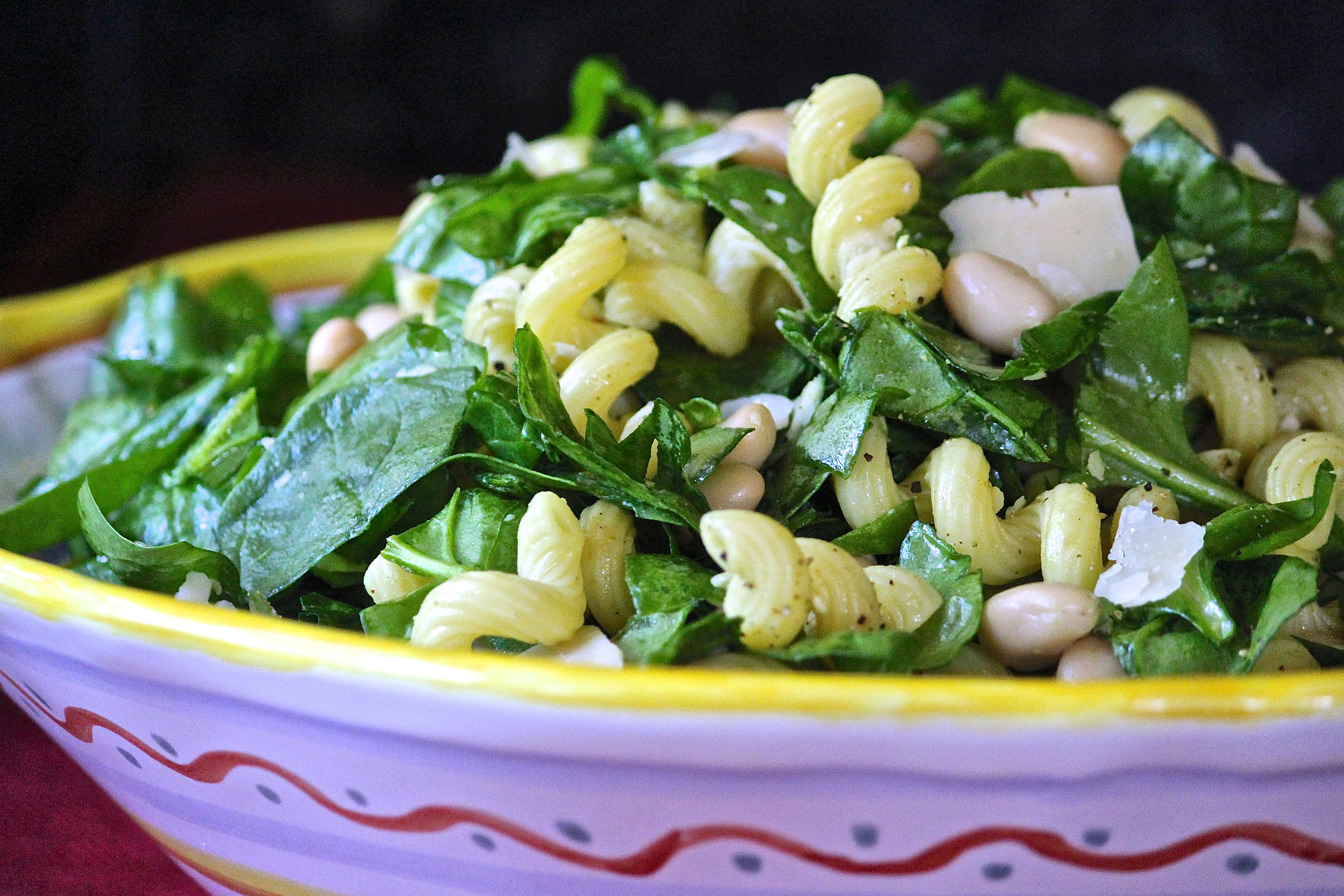
Cavatappi withSpinach, Beans, and Asiago Cheese

Part green salad and part pasta salad, but all parts delicious and fresh! Pair this Italian-influenced salad with rustic artisan bread for a quick and healthy meatless supper or throw it together for easy entertaining. With only nine simple ingredients, this salad is big on taste and big on convenience.

Cavatappi With Spinach, Beans, and Asiago Cheese
The Best of Cooking Light

Ingredients:
8 cups coarsely chopped spinach
4 cups hot cooked cavatappi (about 6 ounces uncooked spiral-shaped pasta)
2 tablespoons olive oil
1/4 teaspoon salt
1/4 teaspoon black pepper
1 can cannellini beans or other white beans, drained
2 garlic cloves, crushed
1/2 cup (2 ounces) shredded Asiago cheese
Freshly ground black pepper (optional)

Directions:
Combine first 8 ingredients in a large bowl, and toss well. Sprinkle with freshly ground black pepper, if desired.

Yield: 4 servings.

Linnell’s Notes:
1. Cavatappi is also known as cellentani, spirali or tortiglione.
2. Maybe I packed too much chopped spinach into each cup while measuring it out, but this made much more than 4 servings.
3. I thinly shaved the Asiago instead of shredding it.
4. In a side note, the recipe states, “The warm cavatappi slightly wilts the spinach and softens the cheese during tossing.”

Enjoy!

Update (6/24/13): I made this salad again, but with some substitutions and additions.  I used cavatelli instead of cavatappi and replaced the regular olive oil with Meyer lemon infused olive oil. Cherry tomatoes, fresh off the vine, were sliced in half and added to the salad along with some toasted pine nuts. Very nice!

Read Full Post »

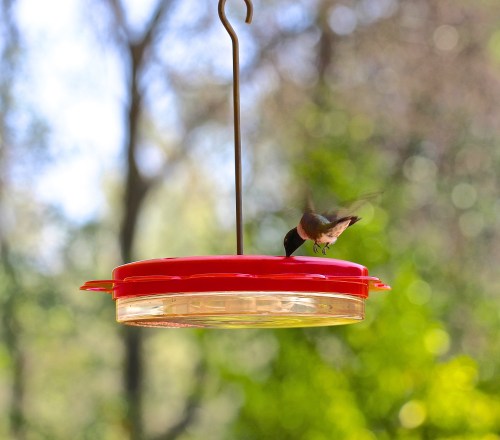
Young Hummingbird Feeding

Photo by Linnell Chang

There’s quite a buzz around the water cooler these days, except in this case the water cooler is a hummingbird feeder. With their fuzzy-looking baby feathers and miniscule stature, young hummingbirds buzz around the feeder competing for food. Some of them are so small that they cannot stand on the perch to feed. If they did, they would be unable to reach the nectar. Most of the adult hummingbirds tolerate the young birds and some even feed simultaneously with the little ones. But like the human species, greed also exists in the bird world and some of the older birds bully and chase away the young ones. Watching the hummingbirds interact reminds me of all the times I told my children, “Please set a good example and share.”

#1 – Mosaic Marvels

Mosaic art by Laura Rendlen

Winters Beauty by artist Laura Rendlen

After viewing the incredible art at the Vatican several years ago, I left with a greater appreciation for the pain-staking art of mosaics. Mosaics may be an ancient art form, but they’re just as beautiful now in modern art installations. I’d like to share with you these 10 stunning examples of modern-day mosaic art.

#2 – Frisée or Mâche?
In my last post, I wrote about growing my own lettuce and serving a very fresh salad for dinner. Also growing in my yard are arugula, kale, and chard. Not bad for a container gardener with a brown thumb! With a variety of salad greens available for us to grow in our yards, buy at markets, or eat in restaurants, it can be difficult to tell them apart. Here’s a Visual Guide to Salad Greens, courtesy of Epicurious, to help you identify them, learn about their characteristics, and link to recipes using them.

#3 – More Great Ideas
Storing wrapping paper Some of the ideas in Even More Simple Ideas that Are Borderline Genius have been around the block a couple of times. However, there are a several of them that had me thinking, “Why didn’t I think of that?” I particularly like the idea of using wired shelving to hold rolls of wrapping paper vertically. Check out these ideas, because maybe there’s one that will make your life easier.

#4 – Furoshiki
Furoshiki are Japanese wrapping cloths. They serve to transport, protect, and/or decorate. Since Furoshiki are reusable, they prevent product waste, especially in the case of wrapping paper and bags. There are different ways to tie Furoshiki, depending on an item’s shape and size. Click here to learn about Furoshiki wrapping techniques.

#5 – Shared Words, Shared Worlds
I share this poem, written by Arab-American poet, songwriter, and novelist Naomi Shihab Nye, with the hope that you will share it with others. Its message is clear: that there’s so much good in a little kindness and that living in a “shared world” is a much better world.

Shared Words, Shared Worlds
–by Naomi Shihab Nye

After learning my flight was detained 4 hours,

I heard the announcement:
If anyone in the vicinity of gate 4-A understands any Arabic,
Please come to the gate immediately.

Well—one pauses these days. Gate 4-A was my own gate. I went there.
An older woman in full traditional Palestinian dress,
Just like my grandma wore, was crumpled to the floor, wailing loudly.
Help, said the flight service person. Talk to her. What is her
Problem? we told her the flight was going to be four hours late and she
Did this.

I put my arm around her and spoke to her haltingly.
Shu dow-a, shu- biduck habibti, stani stani schway, min fadlick,
Sho bit se-wee?

The minute she heard any words she knew—however poorly used—
She stopped crying.

She thought our flight had been canceled entirely.
She needed to be in El Paso for some major medical treatment the
Following day. I said no, no, we’re fine, you’ll get there, just late,

Who is picking you up? Let’s call him and tell him.
We called her son and I spoke with him in English.
I told him I would stay with his mother till we got on the plane and
Would ride next to her—Southwest.

She talked to him. Then we called her other sons just for the fun of it.

Then we called my dad and he and she spoke for a while in Arabic and
Found out of course they had ten shared friends.

Then I thought just for the heck of it why not call some Palestinian
Poets I know and let them chat with her. This all took up about 2 hours.

She was laughing a lot by then. Telling about her life. Answering
Questions.

She had pulled a sack of homemade mamool cookies—little powdered
Sugar crumbly mounds stuffed with dates and nuts—out of her bag—
And was offering them to all the women at the gate.

To my amazement, not a single woman declined one. It was like a
Sacrament. The traveler from Argentina, the traveler from California,
The lovely woman from Laredo—we were all covered with the same
Powdered sugar. And smiling. There are no better cookies.

And then the airline broke out the free beverages from huge coolers—
Non-alcoholic—and the two little girls for our flight, one African
American, one Mexican American—ran around serving us all apple juice
And lemonade and they were covered with powdered sugar too.

And I noticed my new best friend—by now we were holding hands—
Had a potted plant poking out of her bag, some medicinal thing,

With green furry leaves. Such an old country traveling tradition. Always
Carry a plant. Always stay rooted to somewhere.

And I looked around that gate of late and weary ones and thought,
This is the world I want to live in. The shared world.

Not a single person in this gate—once the crying of confusion stopped
—has seemed apprehensive about any other person.

They took the cookies. I wanted to hug all those other women too.
This can still happen anywhere.

Not everything is lost.

Have a great weekend!

Read Full Post »
Fall Fruit Salad

“Healthy” and “holiday” are words rarely used together, especially when describing food. Trying to plan healthy meals during the holidays can be quite a struggle, right? Well, not necessarily. This past Thanksgiving, I served my family a visually appealing, texturally satisfying, and heart-healthy salad. Not only did this salad splendidly highlight fall fruit, such as persimmons, Asian pears, pomegranates, and ruby grapefruit, it was served with a delicate, FAT-FREE, slightly sweet and slightly tart salad dressing! This salad has it all: gorgeous to look at, easy to prepare, and a delight to eat!

Fall Fruit Salad
Recipe from November 1995 issue of Sunset Magazine

Ingredients:
1 to 2 tablespoons pine nuts
2 firm-ripe Fuyu persimmons (1/2 lb. each)
2 ruby grapefruit (1 lb. each)
1 Asian pear (about 3/4 lb.)
3 tablespoons lime juice
3 tablespoons rice vinegar
2 tablespoons honey
2 to 3 cups frisée, rinsed and drained
3/4 cup pomegranate seed
Salt

Directions:
1. In a 6- to 8-inch frying pan over medium heat, frequently stir pine nuts until pale gold, 2 to 3 minutes. Pour from pan.

2. Rinse persimmons, then trim off and discard leaf tops. Slice persimmons crosswise into thin rounds.

3. With a knife, cut peel and white membrane from grapefruit. Holding fruit over a bowl, cut between segments and inner membrane to release fruit into bowl. Also squeeze juice from membrane into bowl, then discard membrane.

4. Rinse pear and discard stem. Cut fruit crosswise into thin rounds, right through center seeds. Coat pear slices with grapefruit juice.

5. Mix 3 tablespoons grapefruit juice (reserve remainder for other uses) with lime juice, rice vinegar, and honey.

6. Line a salad bowl or individual plates with the frisée. Arrange pieces of persimmon, pear, grapefruit on the greens; sprinkle fruit with pomegranate seed and pine nuts, then moisten with the grapefruit-lime dressing. Add salt to taste.

Serves 6

Linnell’s Notes:
1. Fuyu persimmons are the round, squat persimmons that can be eaten while they are firm, unlike the elongated and pointed Hachiya persimmons, which must be eaten only after the fruit has ripened to a soft and somewhat squishy state.

2. Besides a light sprinkling of salt, I also sprinkled some fresh ground pepper on each plated salad.

3. Keep an eye on the pine nuts while toasting them. They contain a high level of oil, so they will burn quickly!

4. My family is not a big fan of frisée, so I substituted fresh green curly-leafed lettuce.

5. It is easier to peel the grapefruit, if you first cut off the top and the bottom peel. This will give you a flat surface when you stand the grapefruit on the cutting board.

ENJOY!

Read Full Post »

The famous Iron Chef Masaharu Morimoto recently lost 40 pounds in three months. How did Morimoto manage to lose so much weight? In a Food Network Magazine interview he said that he cut calories, took walks, sweat as much as he could, limited his alcohol intake, and had his wife do the cooking at home. High-protein tofu was a big part of his new diet. His wife Keiko’s easy recipe for Mashed Tofu and Spinach Salad combines great-for-you tofu with good-for-you spinach. It’s a winning recipe that would make Popeye proud!

Mashed Tofu and Spinach Salad (Shira-Ae)
Recipe by Masaharu Morimoto

Ingredients:
One 14-ounce package firm tofu
Kosher salt
8 cups spinach leaves
1 tablespoon sesame seeds
1½ teaspoons sugar
1 teaspoon mirin (sweet rice wine)
1 teaspoon salt

Directions:
1. Drain the tofu and wrap in paper towels to absorb excess water. Puree in a food processor until smooth, then transfer to a bowl and set aside.

2. Bring a large pot of salted water to a boil. Fill a bowl with ice water. Cook the spinach in the boiling water until wilted, about 2 minutes, then drain and plunge it into the ice water. Drain and squeeze out the excess water.

3. Toast the sesame seeds in a skillet over medium-low heat, tossing, until golden, about 3 minutes. Cool, then grind in a spice grinder. Stir the ground seeds, sugar, mirin, soy sauce and spinach into the tofu. Season with salt.

Serves 2.

Linnell’s Notes:
1. Please note that this recipe only serves 2 people. 8 cups of spinach leaves cooks down to nothing, especially since you squeeze it out after cooking it. I cooked 9 cups of spinach leaves, but after looking at the tofu-spinach ratio, I probably should have cooked 10 cups.

2. One cup of cooked unsalted spinach already has 126 mg of salt in it, so I did not add the full teaspoon of salt at the end. I only added a pinch of salt.

3. I make life easier by purchasing containers of pre-roasted sesame seeds at Asian markets. I keep these seeds in my freezer until they are needed.

4. Adding a little bit of crushed red pepper flakes would give this recipe a little kick.

Enjoy!

Read Full Post »

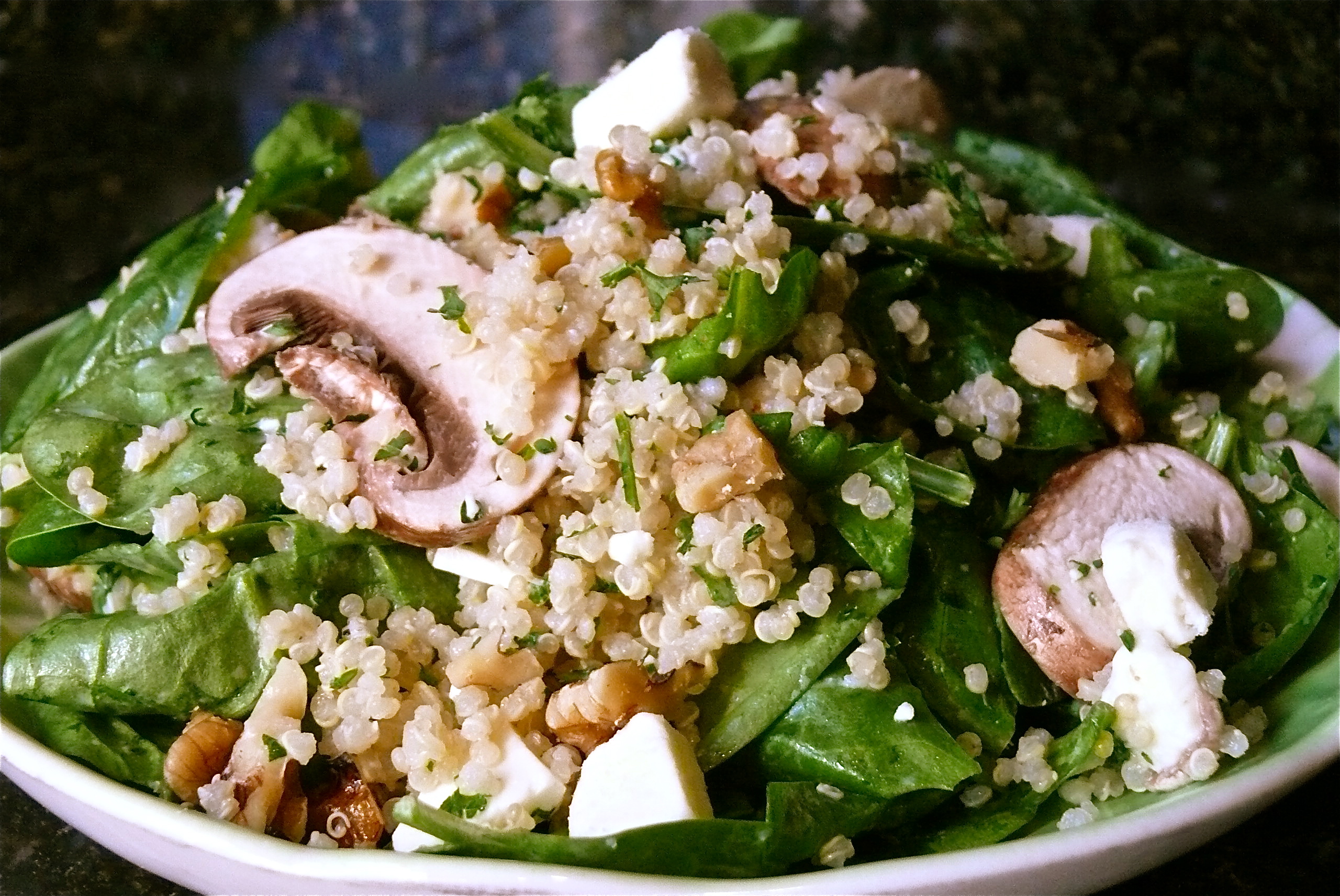
Quinoa is a super food all year round, but it shines especially in summer salads. Take an average spinach and mushroom salad and make it more nutritious and more substantial by adding quinoa to it. And by adding omega-3-rich walnuts, this salad goes from healthy to heart healthy!

Quinoa, Spinach and Mushroom Salad
Recipe by Martha Rose Schulman, author of “The Very Best Recipes for Health”

Salad Ingredients:
3/4 cup quinoa
1¼ cups water
Salt to taste
1 bag baby spinach, rinsed and dried, or 1/2 bunch spinach, stemmed, washed and dried
6 white or cremini mushrooms, sliced
1/4 cup chopped walnuts
2 tablespoons chopped fresh parsley
1 ounce feta cheese, crumbled (1/4 cup, optional)

Dressing Ingredients:
1 tablespoon freshly squeezed lemon juice
1 tablespoon sherry vinegar
1 teaspoon Dijon mustard
1 small garlic clove, puréed
Salt to taste
2 tablespoons extra virgin olive oil
1/3 cup buttermilk
Freshly ground pepper

Directions:
1. Place quinoa in a strainer and rinse several times with cold water. Place in a medium saucepan with 1¼ cups water and salt to taste. Bring to a boil, cover and simmer 15 minutes, until the grains display a threadlike spiral and the water is absorbed. Remove from the heat, remove the lid and place a dishtowel over the pan, then return the lid to the pan and let sit for 10 minutes or longer undisturbed. Transfer to a salad bowl and fluff with forks. Allow to cool.

2. Add the spinach, mushrooms, walnuts, parsley and optional cheese to the bowl.

3. Whisk together the dressing ingredients and toss with the salad just before serving.

Yields: 6 servings

Advance Preparation: You can assemble the salad up to a day ahead, but don’t toss with the dressing until shortly before serving.

Linnell’s Notes:
1. I could not find sherry vinegar in the grocery store, so I used champagne vinegar that I already had at home.

2. I used 1 tablespoon of extra virgin olive oil and 1 tablespoon of Meyer lemon olive oil in the salad dressing.

3. For added flavor, I simmered the quinoa in chicken broth instead of water. Because the broth contains salt, I added no additional salt to the cooking water.

4. Strict vegetarians can choose to omit the feta cheese.

ENJOY!

Read Full Post »

A dinner outing with friends to a new market/deli restaurant provided me with memories of a salad that I couldn’t forget and inspired me to try making it at home. Picture half of a romaine heart sprinkled with fresh bay shrimp, bits of juicy, red, ripe tomatoes, chopped hard boiled eggs, crisp pieces of bacon, and drizzled with homemade Thousand Island dressing. It’s nothing fancy or anything original, but this salad shines on many counts. In a sense, it’s a delicious combination of a wedge salad and a chopped salad, but only better. Romaine lettuce is more nutritious than iceberg lettuce and the flat surfaces of halved romaine hearts are superior for holding toppings over a wedge. The toppings are also reminiscent of ingredients found in a chopped salad. It’s a versatile salad that can be prepared ahead of time and is beautifully served preassembled on a platter or on individual salad plates. For a larger group, this salad can be arranged as an appetizing salad bar. If you’re going the salad bar route, offer more than one salad dressing. For your convenience, I’ve included recipes for both Thousand Island and Creamy Blue Cheese dressings.

Shrimp and Romaine Heart Salad
Recipe by Linnell

Ingredients for Salad:
Romaine hearts (1/2 per person)
Hard boiled eggs, chopped
Bacon, cooked crisp and chopped
Ripe tomatoes, seeded and chopped
Fresh Bay Shrimp, rinsed and patted dry
Salad dressing (recipes for Thousand Island Dressing and Creamy Blue Cheese Dressing below)

Directions:
1. Cut romaine hearts in half lengthwise. Cut off bottoms of stems close to the ends (you want to keep as many leaves attached as possible). Cut off top leaves, so that all hearts are the same length. These tops can be washed and saved for another salad.

2. Carefully place two romaine halves at a time in a salad spinner filled with water. Let sit a bit, pour out water and spin dry.
3. Place romaine halves, cut side down, in an airtight square or rectangular container with paper towels lining the bottom. Add more romaine halves until bottom of container is covered. Cover with another paper towel and then the lid. If storing many romaine halves and the container is deep, place a layer of paper towels over the first layer of romaine halves, add more romaine halves, again cut side down on top of paper towels. Repeat this layering process until all romaine halves are carefully stored. Store container in the refrigerator.
4. Prepare salad dressing(s) and refrigerate.
5. Prepare toppings and refrigerate those that need refrigeration.
6. To plate salad, either place one romaine half on a salad plate, sprinkle toppings over it, and drizzle with salad dressing or arrange all romaine halves on a large platter and sprinkle with toppings and dressing. For a salad bar, place romaine hearts on a platter and place toppings and dressings in small bowls.

Thousand Island Dressing
Recipe from Food.com

Ingredients:
1/2 cup mayonnaise
2 tablespoons ketchup
1 tablespoon white vinegar
2 teaspoons sugar
2 teaspoons sweet pickle relish
1 teaspoon finely minced white onions
1/8 teaspoon salt
1 dash black pepper

Directions:
1. Combine all of the ingredients in a small bowl. Stir well.
2. Place dressing in a covered container and refrigerate for several hours, stirring occasionally, so that the sugar dissolves and the flavors blend.

Makes 5 servings

Creamy Blue Cheese Dressing
Recipe by Rachel Ray

Ingredients:
6 ounces (about 1/3 pound) double cream blue veined cheese, softened to room temperature
1/2 cup heavy cream
1/2 cup sour cream
Salt and pepper
2 pinches ground cayenne pepper

Directions:
1. Mash softened cheese with fork in a bowl.
2. Whisk in the cream and sour cream onto cheese, the consistency should be smooth with an occasional small bit of blue.
3. Season with salt and pepper and cayenne pepper. Refrigerate.

Makes 4 servings

Linnell’s Notes:
1. At a recent party I hosted, I served this salad as a salad bar. Not knowing everyone’s likes and dislikes, I felt it was better to let my guests add their own toppings. About one hour before my guests arrived, I removed the romaine halves form the storage container and arranged them on a platter. I also spooned the toppings and both salad dressings into small bowls. All were covered with plastic wrap and refrigerated until serving time.

2. Do not limit yourself to the toppings listed above. Substitute ingredients to suit your own taste and incorporate seasonal items. For example, use fresh crab meat instead of shrimp, or if fresh corn is in season, by all means use some fresh sweet corn kernels as a topping, etc.

3. I did not add very much salt to the blue cheese dressing because the cheese was already on the salty side.

Enjoy!

Read Full Post »

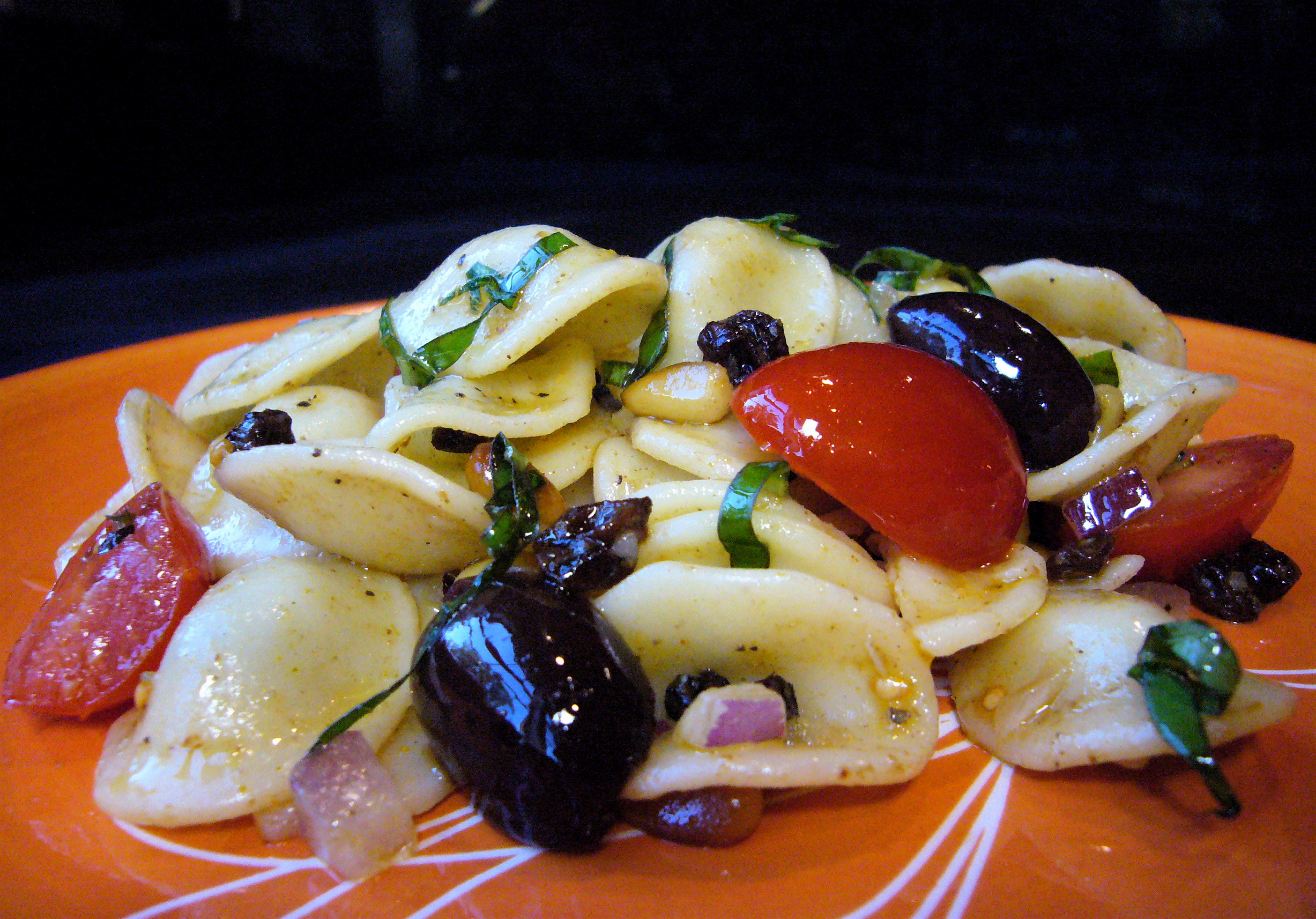
There’s a wonderful little bakery and cafe not too far away from my home that serves an interesting Mediterranean-type pasta salad that I order every time I’m there.  There’s a subtle sweet, spicy, and salty juxtaposition of flavors in the salad dressing that has had me playing detective trying to dissect its complexity.  I’ve been playing around with ingredients and I think I’ve got it pretty close to the original salad now –  but knowing me, I will continue to tweak this recipe long after this post is printed!

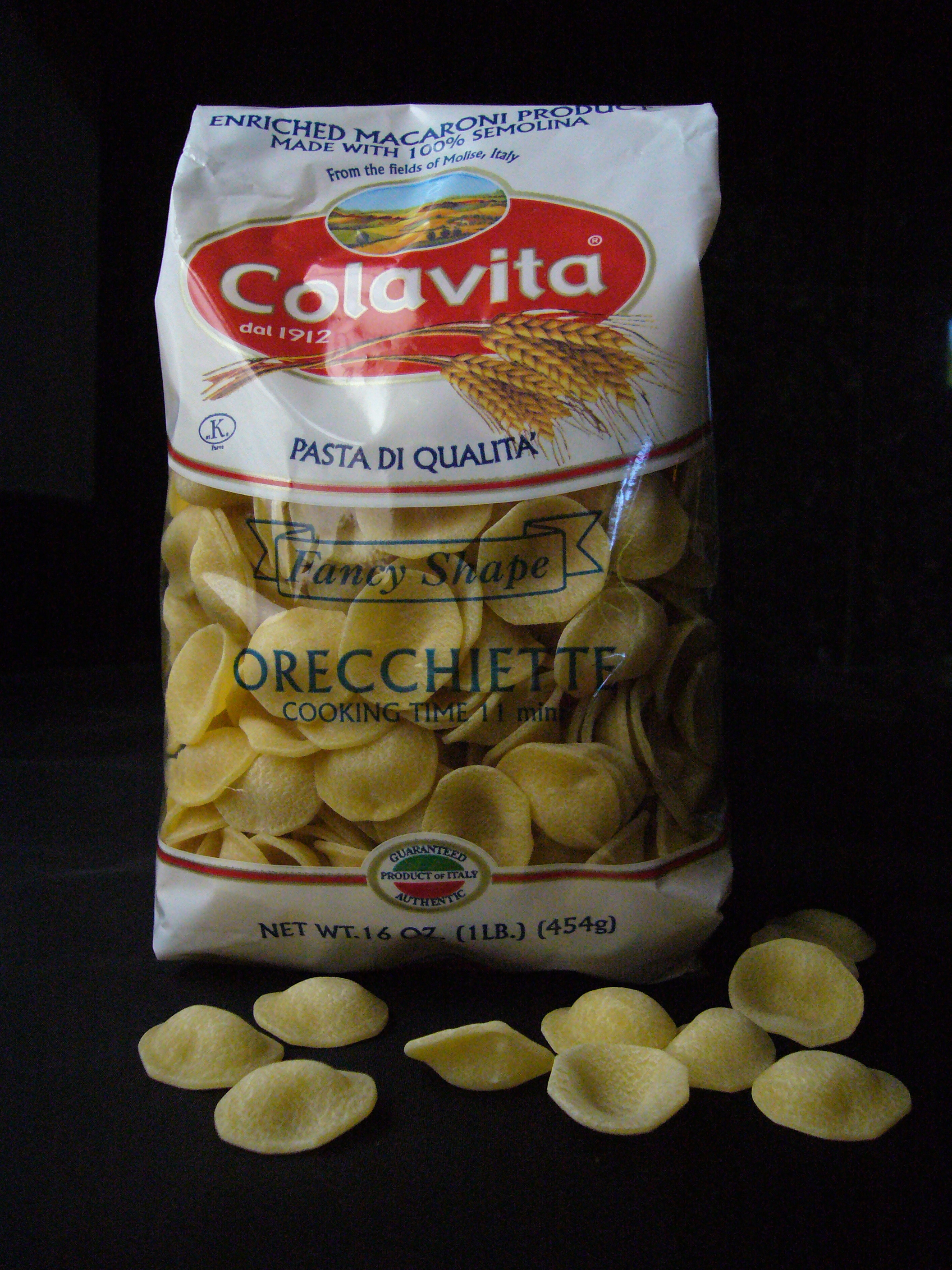
This recipe uses orecchiette, which is a kind of pasta typically made in Puglia, a region of Southern Italy. In Italian, “orecchio”, means ear, and the suffix “etto” means small. If the thought of “small ears” on your plate creates a bad visual for you, then think of this pasta as resembling “small hats” instead! These slightly domed ovals have centers that are thinner than their rims, creating dense and somewhat chewy pasta. Orecchiette is perfect for pasta salad, because it’s sturdy enough to be tossed around and it catches and holds the tantalizing dressing.

Here’s my basic recipe for Orecchiette Pasta Salad. It’s the type of recipe that is adaptable to many variations. Here are some of my ideas for variations:

*Add some citrus into the dressing
*Toss in some cubed or crumbled feta cheese
*Substitute sweet golden raisins for the currants
*Toss in some thinly sliced prosciutto

My Orecchiette Pasta Salad:
Note: The amounts listed for the ingredients can be easily reduced or added upon depending on taste.

Salad Ingredients:

1 pound of orecchietta
12 ounces sweet grape or cherry tomatoes, halved lengthwise
2/3 cup red onion, chopped
1-1/4 cup Kalamata olives, halved lengthwise
2/3 cup currants
2/3 cup pine nuts, toasted
Bunch of basil, chiffonade leaves

Dressing Ingredients:

3/4 cup extra virgin olive oil
1/4 tsp ground cumin
3/4 – 1 tsp curry powder
1/4 -1/2 tsp freshly ground black pepper
½ tsp sea salt
¼ tsp season salt
¼ tsp paprika

Directions:

  1. Following the package directions, cook the orecchiette until al dente. While cooking make sure you stir the orecchiette frequently to prevent the pieces from “nesting” into each other and forming doughy globs. Drain in colander.
  2. Make salad dressing by whisking all salad dressing ingredients into a small bowl. Set aside for flavors to meld.
  3. Slice olives and tomatoes and set aside.
  4. Chop red onion and set aside.
  5. Lightly toast the pine nuts in a heavy frying pan, making sure to keep an eye on them constantly – the oil in them can burn quickly. Let cool.
  6. Rinse the basil leaves and blot them dry. Chiffonade the basil leaves by stacking the leaves, rolling them lengthwise (like a cigar) and then cutting them crosswise into long, thin strips. Set aside.
  7. Put the cooked orecchiette in a large bowl. Add the rest of the salad ingredients except for the basil.
  8. Whisk the dressing again and then pour it into the salad ingredients. Toss all together. Sprinkle the basil on top and gently toss again.

This salad will taste better the next day after the flavors have a chance to blend and soak in. It is best served at room temperature.

Read Full Post »

« Newer Posts