Feeds:
Posts
Comments

Archive for the ‘In The Kitchen’ Category

Hearts and flowers and joy and excitement fill the air at bridal showers. Generations of women gather to shower the bride with wisdom, laughter, and gifts. Thoughts of times passed for some mingle with hopes of the future for others. Women coming together to support one another is always a good thing!

#1 – Champagne Punch
2-12 ounce cans of frozen lemonade or limeade
1-46 ounce can of pineapple juice, chilled
2 bottles of champagne, chilled
1 quart orange juice, chilled
Fruit for ice mold

Dilute one can of the frozen lemonade/limeade with 1 can of water. Pour into tube pan or any mold of choice and add fruit slices, berries or mint leaves for decoration. Freeze until solid.

Mix the remaining frozen lemonade/limeade, pineapple juice, orange juice, and champagne. Place extracted frozen mold from mold pan and put into a punch bowl. Pour mixed beverages into bowl.

#2 – Explore the Sistine Chapel From Home
If you’ve ever visited the Sistine Chapel, you were probably awestruck by the it – you and the other couple hundred visitors crammed into the Chapel with you. It’s difficult to appreciate the magnificence of the art there because of the wall-to-wall bodies. Here’s an interactive site that lets you take a leisurely virtual tour of the Sistine Chapel. On your computer screen the Chapel is completely devoid of people and is available for your complete exploration. Using your computer mouse, you can navigate to any area – the walls, the mosaic floors, and of course the glorious painted ceilings. You can even zoom in on any particular area of your choosing to see details. I wish I had taken this virtual tour, before I visited the real thing!

#3 – Chilling Drinks Quickly
Chill beverages quickly for a party by placing beverage containers in a ice bucket/ice chest and adding layers of ice alternating with layers of salt until almost to the top. Fill your ice bucket/ice chest with cold water just below the top of the ice.

#4 – Instructables
Instructables is a site where do-it-your-selfers can search for step-by-step instructions for a myriad of projects. I came across this interesting project the other day – How To Hide Your Stuff In A Tissue Box. Although it seems easy enough, I’ve not tried making the project, yet. I like the idea, but my biggest problem would be preventing my hubby from using up the tissues and throwing the box away! Maybe one of you could benefit from this idea, though!

#5 – From Within Your Heart
“Find the seed at the bottom of your heart and bring forth a flower.”
~ Shigenori Kameoka

Have a wonderful weekend!

Read Full Post »


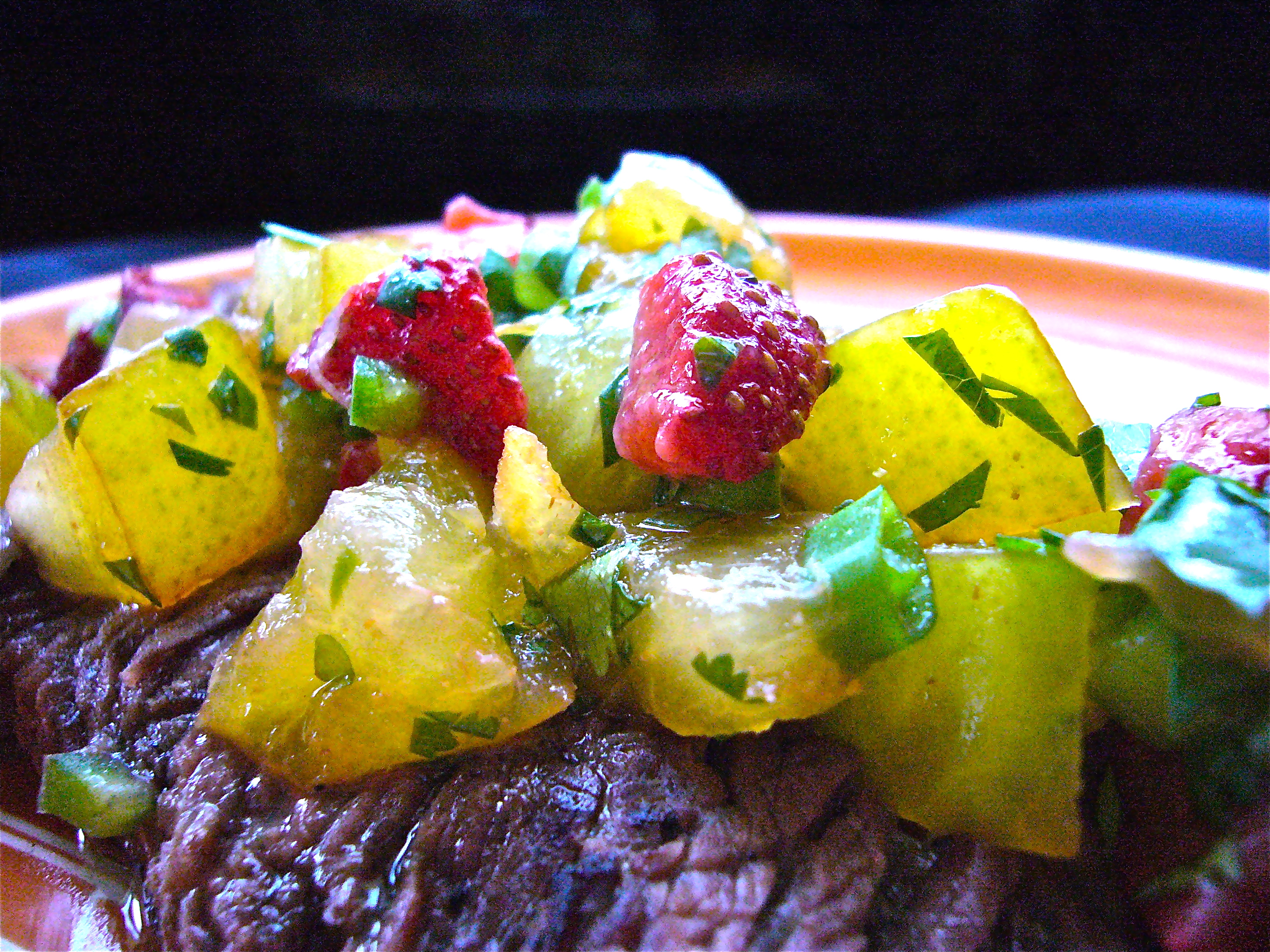
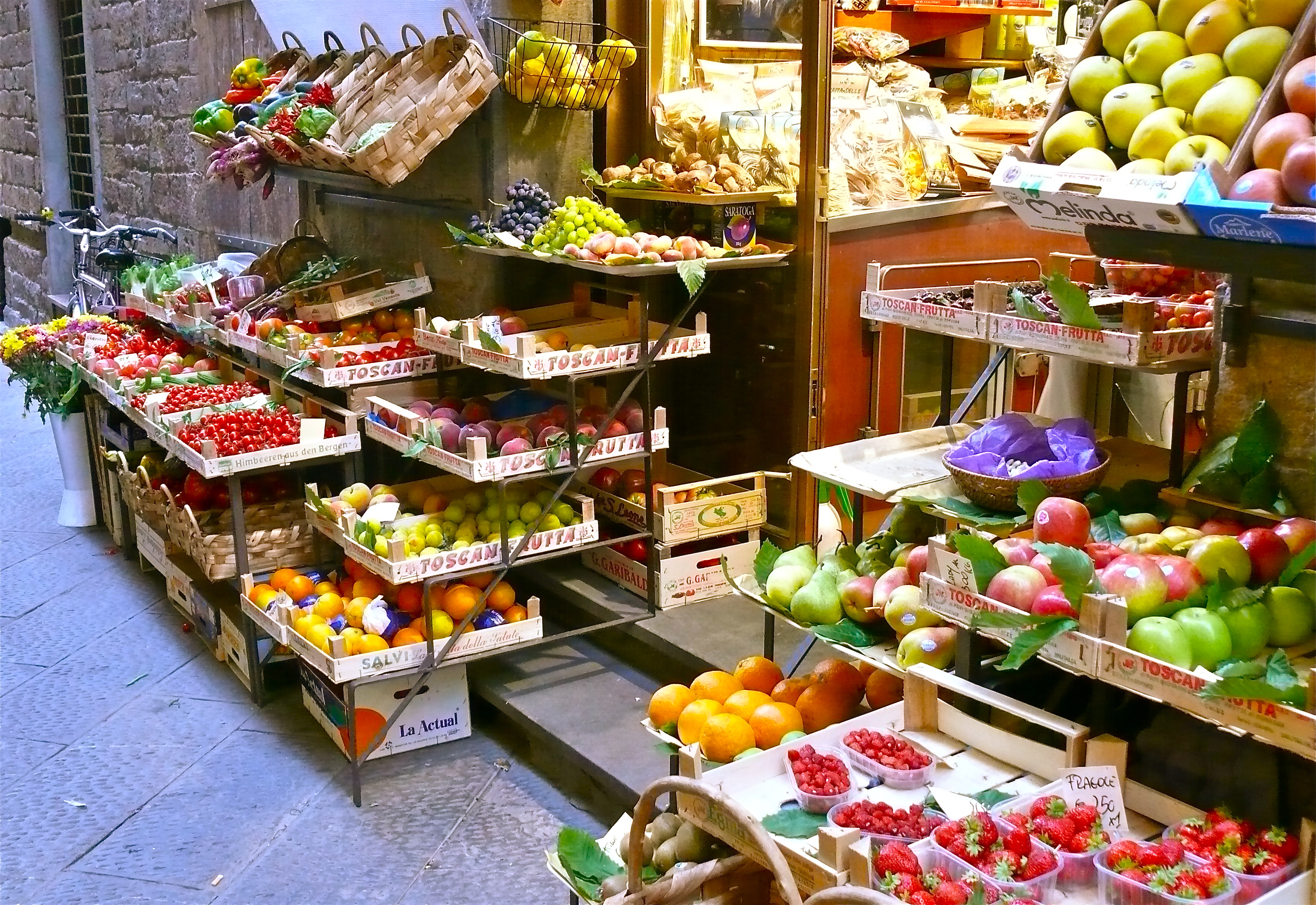
Summertime brings with it scorching hot days, cooling delta breezes, and some of the best fruit of the year. Peaches, plums, nectarines, apricots, berries, cherries, and melons are at produce stands now. My sister-in-law was kind enough to share her bounty of pluots with the rest of the family, so I thought I would thank her by sharing a pluot recipe. Although a pluot is a delicious cross between a plum and an apricot, it more closely resembles a plum in appearance. There are many varieties of pluots available, but the type I received are golden-green on the outside and yellow on the inside. No matter what they look like on the outside, they all contain healthy amounts of fiber and vitamins A and C.

Here’s a recipe for a Pluot and Strawberry Salsa that’s great on grilled seafood or meat:

Ingredients:
About 1 pound or 5-6 pluots, diced
1/2 lime, juiced
Big handful of strawberries, washed, hulled, and diced
1/4 cup green onions, both white and green parts sliced
1/2 to 1 jalapeno pepper – depending on preferred heat, finely diced
1/4 cup cilantro leaves, chopped
1/8 tsp cumin, optional
Salt and pepper, to taste

Directions:
1. Wash and dry pluots. Cut vertical segments off around the pit and dice. Place in bowl. Note: Some recipes call for removing the skin first, but I leave it on for more nutritional fiber.

2. Juice the lime and pour over the diced pluots.

3. Add strawberries, green onions, jalapeno, cilantro, and cumin (if desired) to the bowl of pluots.

4. Carefully combine ingredients, being careful not to smash the fruit.

5. Add salt and pepper to taste.

Makes 2 -3 cups.

Read Full Post »


Fourth of July weekend usually means patriotism, fireworks, barbecues, picnics, and cooling down in some form of water. No matter what you do for your holiday weekend, please take necessary precautions and be safe! Wear sunscreen and hats, store picnic food at safe temperatures, and if you are going to a lake, river, or beach don’t forget to pack life vests! My little dog wears his life vest when he swims in my pool. He’s had two surgeries to repair torn ACLs, so he begrudgingly dog paddles to rehabilitate his knees and stave off arthritis.

#1 -Independence Day Trivia
Here’s a sampling of Fourth of July trivia questions from Starpress.com and a few I threw in to keep you are on your toes:

Q: July 4 celebrates the passage of what important document?
A: Declaration of Independence

Q: What is the name of the group that passed the Declaration of Independence and when?
A: Continental Congress on July 4, 1776.

Q: Who wrote the Declaration of Independence?
A: Thomas Jefferson was the primary writer. Roger Sherman, Benjamin Franklin, Robert Livingstone and John Adams also were members of the committee charged with writing the Declaration of Independence and revisions.

Q: By what title did the Continental Congress call the Declaration of Independence?
A: The Unanimous Declaration of the Thirteen United States of America.

Q: How many people signed the Declaration of Independence on July 4, 1776?
A: Two

Q: How many signatures are on the Declaration of Independence?
A: 56

Q: The first 10 Amendments to the Constitution are familiarly known as?
A: The Bill of Rights

Q: What do the colors on the flag stand for?
A: There is no record stating why red, white, and blue where chosen for the flag.

Q: The dollar amount of all U.S. fireworks imported?
A: $211 million

Q: Estimated number of Fourth of July cookouts?
A: 150 million

#2 – Picnic Safety Tips
If you’re planning a picnic this Fourth of July, take care that you’re following these safety tips as provided in an article by whatscookinginamerica.net. Click on the link to read the entire article, otherwise here’s a synopsis:

A. As always, wash hands and work areas before preparing food.

B. Cook foods in plenty of time to thoroughly chill them in shallow containers in the refrigerator.

C. Have enough coolers with ice or frozen gel packs and pack foods right from the refrigerator into the coolers.

D. Don’t put the cooler in the car trunk; Carry it inside an air-conditioned car. At picnics, keep the cooler in the shade and keep the lid closed. Replenish the ice if it melts.

E. Use a separate cooler for drinks so the one containing the food won’t constantly be opened and closed.

F. Find out if there’s a source of safe drinking water at your destination. If not, bring water for preparation and cleaning; or pack clean, wet, disposable cloths or moist towelettes and paper towels for cleaning hands and surfaces. Cross-contamination during preparation, grilling, and serving food is a prime cause of food borne illness.

G. Pack raw meats, poultry, or seafood on the bottom of the cooler.

H. If you plan on getting takeout foods such as fried chicken, eat them within an hour of pick up.

I. Do not partially grill extra meat or poultry to use later.

J. Don’t put the cooked items on the same platter which held the raw meat.

K. Two Hour Rule. Don’t leave perishable food un-refrigerated for more than two hours.

L. Discard leftovers.

#3 – Patriotic Flower Pots
Buy red, white, or blue flower pots and plant them with red geraniums, blue salvia, and white petunias or any other combination of red, white, and blue summer annuals. Purchase some patriotic-colored, wide, wired ribbon at your local crafts store. Plant the flowers, tie the ribbon in a bow at the front of the pot, and place pots wherever you need a pop of patriotic color that will last all summer long.

#4 – Patriotic Drink
The secret to creating a red, white, and blue multilayered drink is finding beverages with different sugar contents, so says an article in Disney Family Fun. Beverages with more sugar, like fruit juices, are denser and are poured first. The second layer the article suggests would be something like an athletic beverage and the top layer, which would have the least amount of sugar, would be a diet drink. The following recipe from the article is for a children’s patriotic drink, but think of all the possibilities for adult drinks!

Ingredients:
Ice cubes
Cranberry juice
Wild Berry flavor Gatorade Fierce
Diet 7-Up

Instructions:
1. Fill a clear glass with ice cubes. Pour the drink with the most sugar (check the nutrition label) into the glass. For our red, white, and blue recipe, start with the cranberry juice.
2. Very slowly add a beverage that contains less sugar — in this case, Wild Berry flavor Gatorade Fierce. Be careful to pour it onto an ice cube — not directly into the other drink — to keep them from mixing.
3. Use the same technique to add a layer of Diet 7-Up.

#5 – Freedom
Freedom has its life in the hearts, the actions, the spirit of men and so it must be daily earned and refreshed – else like a flower cut from its life-giving roots, it will wither and die.
Dwight D. Eisenhower

Have a happy and safe Fourth of July weekend!

Read Full Post »

Hooray! I am the proud mother of a thirteen ounce cucumber! I just harvested my first cucumber of the season and although it may be the first and only one I ever harvest this summer, I can at least say that I finally grew something I could eat! Other veggies in the garden are looking good, too – the tomatoes are are still clinging to their vines and the “squashettes” and “eggplantettes” have not yet shriveled up. Life is good! Keep your fingers crossed for me!

#1 – Trip Tip
If you are planning a trip, I would recommend you check out TripAdvisor. Prior to planning our trips abroad, my husband and I consult the site and we’ve always found it to be extremely helpful. While searching for hotels we learn valuable information by reading reviews submitted by other travelers. The reviews often contain comments such as the pros and cons of staying at different hotels, location advantages, restaurant recommendations, numerous sight seeing tips, and photos taken from and of the hotels.

#2 – Seafood Savvy
How savvy are you when it comes to purchasing seafood at the market or ordering it at a restaurant? The Environmental Defense Fund’s website lists which seafoods are eco-best, eco-okay, or eco-worst. It also provides better alternatives and recipes. You can download a Seafood Pocket guide or a Sushi Pocket guide from the site, too.

Here’s a recap of the EDF’s categories:

Eco-Best choices describe:

  • wild fish from healthy, well-managed populations, caught using fishing gear that does little harm to sea life and marine habitats;
  • or farmed fish raised in systems that control pollution, the spread of disease, chemical use and escaped fish.

Most fish on this list are also low in environmental contaminants and can be safely eaten at least once per week.

Eco-OK fish have mixed records on:

  • how they are managed,
  • the health of their habitat,
  • or how they are caught or farmed.

Some fish on this list may have elevated levels of environmental contaminants – such as mercury or PCBs – and should be eaten in moderation.

Eco-Worst choices have one or more serious environmental problems, such as overfished populations, poor management, high bycatch, extensive habitat damage; or come from farms that allow widespread pollution, the spread of disease, chemical use and escaped fish.

We work with many of these fisheries to help them become more sustainable and keep fishermen on the water. As fisheries improve, they are moved up the list.

Many fish on this list have elevated levels of environmental contaminants – such as mercury or PCBs – and should be eaten in moderation, if at all.

#3 – Rainbow in Your Hand
There is no end to creativity. Someone created a flipbook that, instead of creating animated images as the pages are flipped, creates a three dimensional rainbow in your hand! How very clever!

#4 – Men’s Summer Style Tips
Askmen.com had an article called, “Men’s Summer Fashion Mistakes” that I read because I was curious to see what kind of fashion trouble men could get into during the summer months.

Read the article yourself, but otherwise I offer my quick synopsis:
1. Do not wear socks with sandals, boat shoes, or drivers.
2. Cargo shorts are out.
3. Switch to a lighter, more refreshing fragrance.
4. Do not wear flip flops, Teva-type sandals, or thin-strapped European sandals for any outing other than to a beach or a barbecue.
5. Do not wear tank tops.
6. Billowy board shorts don’t cut it anymore.
7. Outside of athletic activity don’t wear wraparound shades.

My husband scored fairly well. He only got dinged for two out of the seven entries and, believe me, I’ve been working on those two issues with him!

#5 – Fill Yourself Up
“What I know for sure is this: You are built not to shrink down to less, but to blossom into more. To be more splendid. To be more extraordinary. To use every moment to fill yourself up.” -Oprah

As always, enjoy your weekend!


Read Full Post »
Having already documented in my post “Living Off the Fat of the Land” my inability to grow vegetables of any quantity and quality, I’ve decided to focus my “need-to-grow-something-edible” on my herb garden. Rosemary is the king in my garden, and it’s too bad that one cannot survive on it alone, because a little 4-inch container planted in my yard has grown into a grand piano-sized bush. Does anyone need any rosemary? Besides rosemary, I also grow tarragon, lavender, oregano, sage, mint, chives, basil, thyme, dill, nasturtium, and lemongrass. And although it is not an herb, I have a kaffir lime tree whose leaves are used to flavor Southeast Asian dishes.

Pretty much all the herbs I grow are perennials. The only annuals I need to replant each year are dill and basil. Perennial herbs are like weeds – they may die off in the winter, but they come back again. That’s why I like them! A word of caution about a particular perennial herb, though. Because mint is invasive, it is best to plant it in a container unless you want it to take over your yard.

Many of the herbs I grow can be propagated in water. Mint, basil, sage, thyme, rosemary, oregano, and lemon grass should all form roots if you cut a 4 to 6 inch long piece of the herb, remove all the leaves from the bottom, and place the cutting in a glass or jar of water. Place the glass in a semi-shady location or where it will receive indirect light and change the water every day or two. The cutting should start setting roots in a few days and will be able to be transplanted carefully into the garden within one to two weeks. I’ve even had success rooting basil and lemongrass purchased at the market. On my kitchen counter I have a row of little vases lined up holding herb cuttings. They’re rooting and decorating my kitchen at the same time.

Here’s a simple and fragrant rice pilaf recipe that utilizes fresh rosemary sprigs. I’ve made it when I’ve needed a flavorful rice dish that wouldn’t detract from the main course.

Rice Pilaf
(Adapted from a Food Network Kitchen recipe)

Ingredients:
3 T butter
1 shallot, thinly sliced or chopped
1 to 1-1/2 tsp salt
Freshly ground black pepper
2 cups long grain rice (basmati is good)
3 cups chicken broth
1 bay leaf
1-2 sprigs fresh rosemary

Directions:
In a medium saucepan over medium-low heat, melt the butter and the shallot. Season with salt and pepper and cook until the shallots are soft. Add the rice and stir until coated with the butter. Increase the heat to medium-high. Let the rice cook until lightly toasted, stirring occasionally, but being careful not to let the rice burn – about 5 minutes. (Note: At this point, if desired, the rice can be transferred to a rice cooker to which the broth, bay leaf, and rosemary sprigs can be added).

To the saucepan of rice, stir in the broth, bay leaf, and rosemary. Bring to a simmer over low heat, cover, and cook until all the broth has been absorbed by the rice and the rice is tender, about 15 to 18 minutes. It is better to refrain from removing the lid and taking a peek during this steaming period. Remove the pan from the heat and let set for 5 minutes. Discard the rosemary and bay leaf. Fluff the rice with a fork before serving.

Makes about 5 cups of rice.

Read Full Post »

The Oprah Show was playing in the background, as I sat at my kitchen table with a stack of cookbooks trying to gain some inspiration for dinner. I was on a quest to find something different for dinner that was reasonably simple to prepare, did not require a ton of ingredients, and was on the healthier side. Then I heard Oprah say, “I believe [it] may be the best turkey burger in the entire world.” I thought to myself, “Good turkey burgers? Is there such a thing?” Because they lack a significant amount of fat, I was under the impression that turkey burgers were dry and flavorless unless you added back a lot of “bad” stuff. Oprah brought Jeff O’Neill, the chef from Donald Trump’s private club Mar-a-Lago, on her show to prepare the burgers on stage. His turkey burgers looked juicy and had ingredients that were different from other burgers. I sped off to the market to pick up a few ingredients and zipped back home to test the recipe and to find out if Oprah’s praise for these burgers was deserved or not. They did not disappoint and they are among my daughter’s friends’ favorites when they come to visit.

Mar-a-Lago Turkey Burgers

Ingredients:

1/4 cup thinly sliced scallions

1/2 cup finely chopped celery

3 Granny Smith apples, peeled and diced

1/8 cup canola oil

4 pounds ground turkey breast

2 Tbsp. salt

1 Tbsp. black pepper

2 tsp. Tabasco® chipotle pepper sauce

1 lemon, juiced and grated zest

1/2 bunch parsley, finely chopped

1/4 cup Major Grey’s Chutney, pureed

Directions:

Sauté the scallions, celery and apples in the canola oil until tender. Let cool.

Place the ground turkey in a large mixing bowl. Add sautéed items and the remaining ingredients. Shape into eight 8-ounce burgers. Refrigerate for 2 hours.

Season the turkey burgers with salt and pepper. Place on a preheated, lightly oiled grill. Grill each side for 7 minutes until meat is thoroughly cooked. Let sit for 5 minutes.

Serves 8.

Linnell’s Notes: I never add the full 2 tablespoons of salt, however, my taste buds have adjusted to a lower sodium diet. Also, depending on how chunky the chutney is, sometimes I puree it and sometimes I don’t. I also play with the amounts of apple, celery and green onion. If I have a bit more than the required measurements leftover, such as a few slices of apple, half a celery stalk or a green onion, I go ahead and add them. The last time I made these I only had 2 pounds of ground turkey and I made at least six patties. My husband usually grills the burgers for 4-5 minutes on each side and not the 7 minutes mentioned in the instructions. Of course, this is all a function of how thick you make your patties.

Enjoy this great recipe!

Read Full Post »

There are always so many reasons to celebrate life, but this weekend is special. My youngest child celebrates her 21st birthday today and I feel so blessed that she has become such an extraordinary adult.  And when I count my blessings, I always include the amazing men in my family. Today’s post is dedicated especially to my dad and my husband, and to all the fathers who work hard, sacrifice a lot, and love beyond measure.

#1 – Top Ten Father’s Day Gifts
Weigh AskMen.com‘s top ten Father’s Day gift suggestions against gift suggestions from What About This?:

1. Landscaping services versus Go to the park or work in the garden with your dad
2. Sports tickets versus Playing his favorite sport with him
3. Meat versus Prepare your dad a tasty and nutritious meal
4. Driving gloves versus Plan a nice drive or day trip with him
5. Wine versus Take him wine tasting
6. Leather wallet versus Create a digital inventory of his valuable personal property for him
7. Set of golf clubs versus Play a round with him, go to the driving range, play miniature golf
8. Fishing gear versus Take him fishing
9. Alcohol versus A nice dinner out together
10. Grilling tools versus Clean his grill for him

You get my drift. Spending time and doing is better than buying.

#2 – Power Breakfasts
Menshealth.com has an article called “Abs Diet Super Bowls” that caught my attention because the ingredients listed in its “Honey, I Shrunk My Gut” bowl are similar to those I eat for breakfast every morning! Check out these recipes and please, no wise cracks about my gut!

#3 – Graduation Thank You Cards
I make my own thank you cards using photos that I take and card stock. Here’s an idea for graduation thank you cards: Print photos of the graduate or of some aspect of the graduation ceremony (hats thrown in the air, close up of the diploma, family photo at graduation, etc.) and using either double stick tape or glue that is photo safe, adhere it to a piece of 8.5″ x 5.5″ card stock folded in half. That would be a sheet of 8.5 ” x 11″ card stock cut in half. Personalizing the card with a photo makes the thank you card extra special for those who could not be there for the celebration or have not seen the graduate in a while. Envelopes can be purchased at any office supply or paper goods store.

#4 – You Peel Tomaaaato, I Peel Toooomato
To peel tomatoes (peaches, and plums, too):  Wash and remove any stickers. Gently remove the stem. With a paring knife, cut a small, shallow “x” on the bottom. Plunge the tomato into boiling water for about 15 – 25 seconds, then put it into a bowl of ice water to cool. After it’s completely cooled, wipe it dry and gently peel off the skin.

#5 –  A Father’s Greatest Gift
“My father gave me the greatest gift anyone could give another person, he believed in me.” -Jim Valvano-

Have a joyful weekend and a happy Father’s Day wish to all those wonderful dads out there!

Read Full Post »

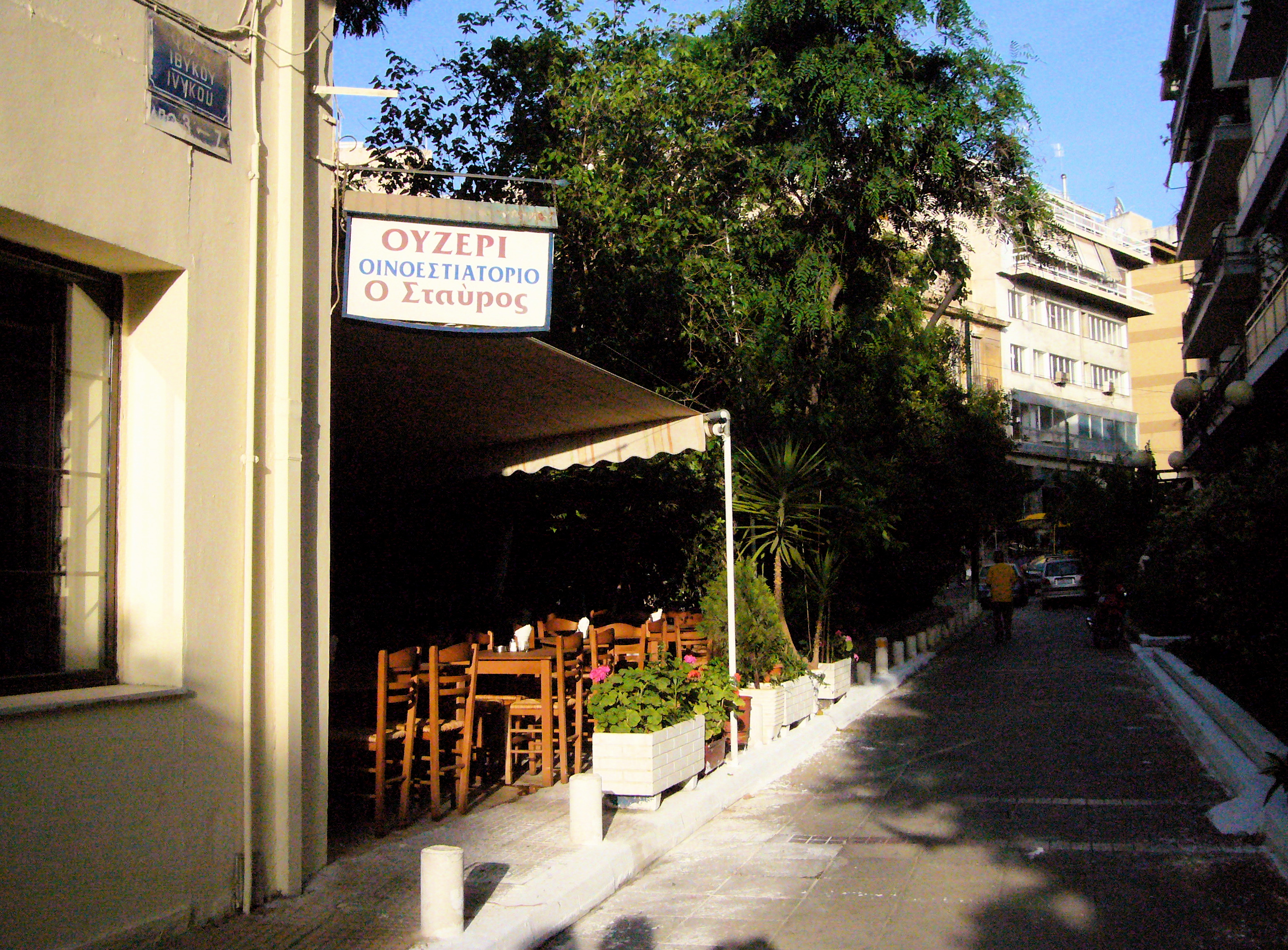
It’s all about the food. Sometimes the best way to learn about a country and its culture is to learn about its food and its cooking traditions. Lucky for me, my daughter, who was a student in Greece for nearly five months, was not only my tour guide to the ancient sites, but also my culinary guide.

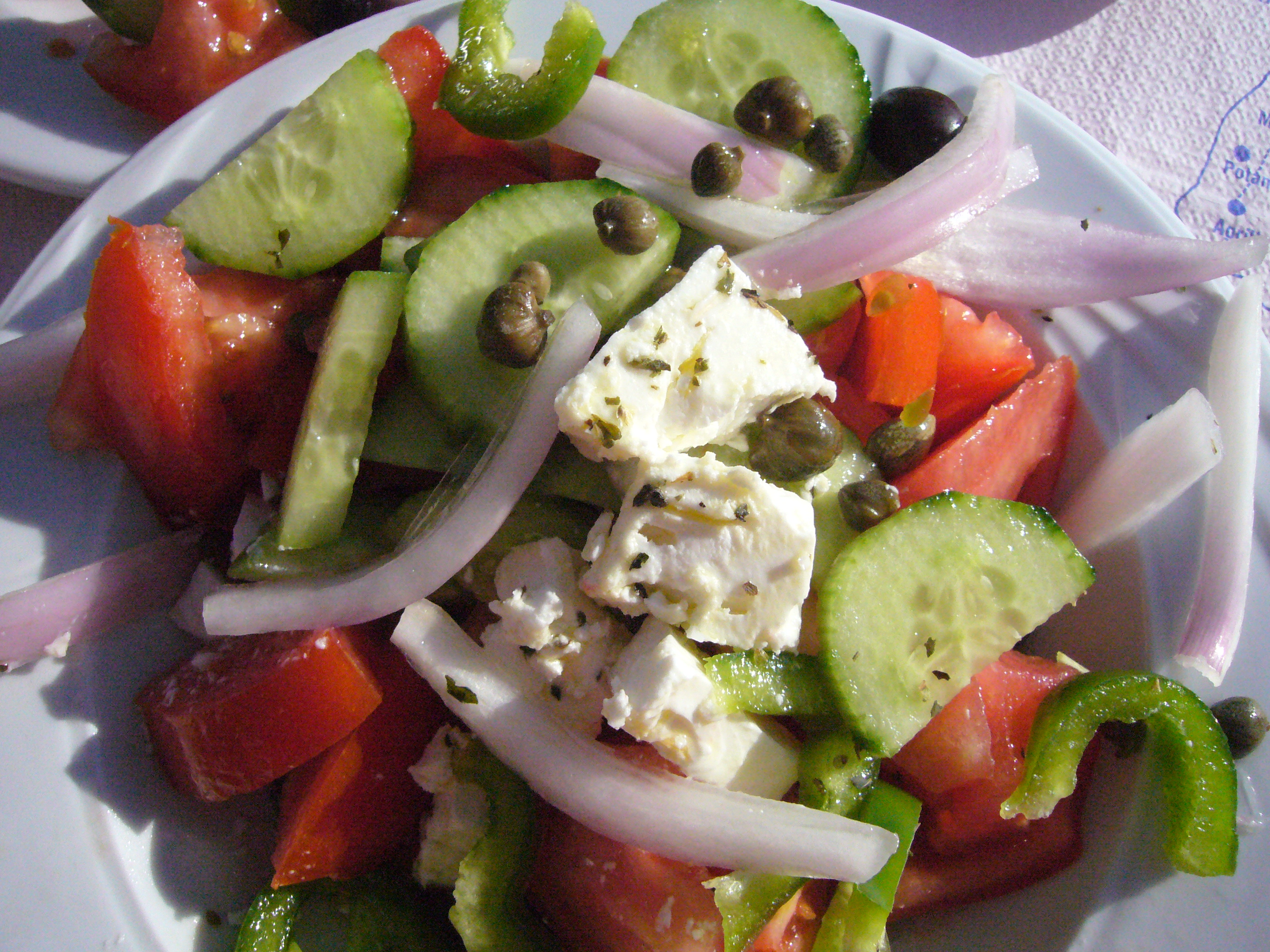
From dining in little tavernas that speckle the narrow side streets of Athens to eating fresh-caught fish off the coast of Santorini, I was introduced to the exquisite textures and flavors of Greek food. Sampling inch-long baby okra cooked in a light tomato and onion sauce, devouring tiny fried whitebait fish – head, tail, spine and all, and spreading pureed dried yellow peas on bread, were just some of the opportunities I used to discover the gastronomic resources available to the Greeks. I learned that some of the varieties of legumes we eat today are the same ones once eaten in ancient times.

And because the sun shines most of the year and very little rain falls, Greek tomatoes and peppers are exceptionally sweet. The freshness of Greek ingredients cannot be denied. Most foods are simply delicious because they are prepared with fresh and few ingredients. Very few over-processed foods ever made it to my table while I was in Greece.


Scorpion fish or grilled octopus, anyone? The seafood in Greece was as good as I had anticipated. The subtle lobster-like flavor of the Scorpion fish and the chewy texture of the fresh octopus were both delicious, but it was the fried calamari that really got my attention. Maybe it was the freshness of the squid or the very lightest dredging of flour or the addition of exactly the right amount of salt, but this Greek version of fried calamari was by far the best I’ve ever tasted!

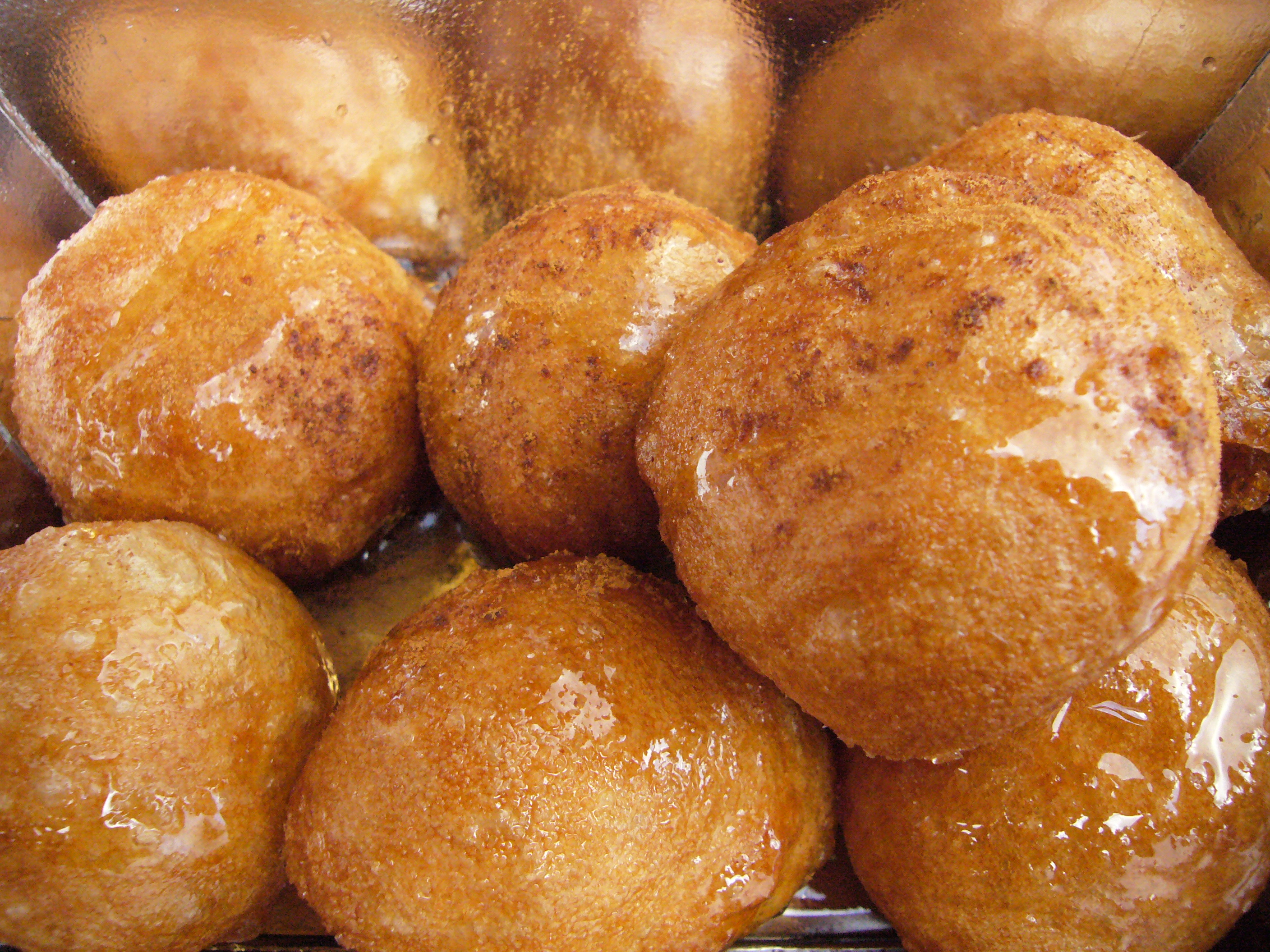
The Greeks love their sweets. The sweet scent of freshly baked pastries found me following my nose into more than one local bakery. Even before I left home, my daughter had warned me about this temptation. I’d heard her stories about Bougatsa me Krema and was looking forward to my first taste. It did not disappoint. How could warm layers of buttery, thin phyllo sheets filled with creamy custard, and sprinkled with confectioner’s sugar and cinnamon be disappointing? Before the introduction of sugar, ancient Greeks used honey to sweeten their food. Thick, creamy, Greek yogurt and honey is a traditional treat and Greeks like to make sweet syrups from honey to pour over their cakes and fried sweets. Many Loukoumades or Greek donut balls coated in a honey-syrup called out to me.

Now back at home, I wanted to try my hand at making the memorable Bougatsa me Krema and I found a recipe online. Flakey, buttery and filled with custard – mine was pretty darn close to the deliciousness I experienced in Greece! I share this temptation with you.

Bougatsa me Krema or Creamy Custard Phyllo Pastry

-Courtesy of Nancy Gaifyllia of About.com with comments by Linnell-

Prep Time: 1 hour

Cook Time: 30 minutes

Total Time: 1 hour, 30 minutes

Ingredients:

* 4 1/4 cups of whole milk

* sliced peel of 1 lemon

* 1 1/4 cups of granulated sugar

* 3/4 cup of semolina (durum wheat flour which I found in my local grocery store)

* 4 eggs

* 1/4 teaspoon of vanilla extract

* 12 sheets of commercial phyllo dough

* 6 ounces of butter, melted

For the topping:

* confectioner’s sugar

* ground cinnamon

Preparation:

Warm the milk and lemon peel in a saucepan. Stir in semolina with a wooden spoon until the mixture is thoroughly blended and thickened. In a mixing bowl, beat the eggs, sugar, and vanilla until light and add to the pan, stirring over medium-low heat until it reaches a creamy custard consistency. Remove from heat, take out and discard lemon peel, and allow it to cool completely. Stir occasionally to keep the custard from forming a skin on top.

Preheat oven to 350°F (180°C).

Lightly brush a baking pan (13 X 9 X 2 or equivalent) with butter. Line the bottom of the pan with 8 sheets of phyllo, brushing each sheet well with the melted butter. Add the custard filling. Fold the excess phyllo that overlaps the pan in over the custard. Top with the remaining phyllo, brushing each with butter. Use a scissors to trim the top sheets to the size of the pan. Spray the top lightly with water and bake at 350°F (180°C) for 30-40 minutes, until the top is golden brown.

Remove from oven, sprinkle with confectioner’s sugar and cinnamon while hot, and serve warm.

Serving tip: In Greece, Bougatsa is cut with a pizza cutter.

Enjoy!

Adventures in Greece – to be continued . . .

Read Full Post »

With airline food what it is (or isn’t) these days, I always pack my own food to eat when I travel. I used to take peanut butter and jelly sandwiches because of their nonperishable nature until I came across a “no-peanut flight.” All passengers on that flight, including my family, were asked to not carry aboard any food that contained peanuts or peanut butter, because a passenger with a severe peanut allergy was going to board the plane. Most people seemed to comply, but many were not too happy, especially when after boarding, bags of opened peanuts were found in seat pockets all over the plane! Someone forgot to tell airline housekeeping about the “no-peanut flight!” That said, my favorite travel fare usually includes some of the following: sandwiches made without mayonnaise, apples, oranges, beef jerky, granola bars, homemade trail mix, and always homemade cookies.

These buckwheat cookies with cacao nibs are among my favorite cookies to eat whether I’m traveling or not. I like the texture and taste that the buckwheat flour lends to the cookies. Because buckwheat is low in gluten, it works like cornstarch does in shortbread cookies; it produces a more compact and crunchy-textured cookie. As for the cacao nibs, small pieces of roasted cocoa beans, they give these cookies a nice crunch and a hint of chocolate flavor. An added bonus of these nibs is that they won’t melt during your trip like chocolate chips normally would. I purchase cacao nibs at Whole Foods. I like to add chopped walnuts to this recipe because they add protein and fiber – good things to have when traveling!

There are many variations of this recipe on the internet, but most seem to originate from the cookbook Pure Dessert by Alice Medrich. Here’s my adaptation of Ms. Medrich’s recipe:

Ingredients:
1-1/4 cups all-purpose flour
3/4 cup buckwheat flour
1/2 lb. (2 sticks) unsalted butter, softened
2/3 cup sugar
1/4 tsp. salt
1/3 cup cacao nibs
1-1/2 tsp. pure vanilla extract
1/2 cup chopped walnuts, optional

Directions:
1. Whisk the all-purpose and buckwheat flours together in a medium bowl. Set aside.

2. In a medium bowl, with the back of a large spoon or with an electric mixer, beat the butter with the sugar and salt for about 1 minute, until smooth and creamy but not fluffy. Mix in the nibs and vanilla. Add the flours and the walnuts; mix just until incorporated. Scrape the dough into a mass and, if necessary, knead it with your hands a few times, just until smooth.

3. Form the dough into a 12 by 2-inch log. Wrap and refrigerate for at least 2 hours, or, preferably overnight.

4. Position the racks in the upper and lower thirds of the oven and preheat the oven to 350F degrees. Line the baking sheets with parchment paper.

5. Use a sharp knife to cut the cold dough log into 1/4-inch-thick slices. Place the cookies at least 1-1/2 inches apart on the baking sheets.

6. Bake until the cookie are just beginning to color at the edges, 12 to 14 minutes, rotating the baking sheets from top to bottom and front to back halfway through the baking. Cool the cookies in the pans on a rack, or slide the parchment liners carefully onto the rack to free up the pans. Let cool completely. The cookies are delicious fresh but even better the next day. They can be stored in an airtight container for at least one month.

Makes about 2 dozen cookies

Note: After the cookies have cooled completely, I wrap them individually in plastic wrap, put them in a Ziploc bag and freeze them. Just before I leave the house, I grab them out of the freezer, throw them in my carry-on bag, and they’re good to go!

Read Full Post »

Continuing to “attack the stack,” I pulled a newspaper clipping out of a pile and looked at the date of May, 2008. “It’s time to check out this baby,” I thought to myself. Perusing the very short list of ingredients – only four – I noted that I had everything that was required. Nothing extraordinary on the list except for b-e-e-r! How great is it that the yeast in beer acts as a mild leavening agent, so we can use it in our baking?!

One of the comments provided by the newspaper recipe contributor was,”This bread is a canvas for you to flavor any way you choose.” Being a risk-taker in the kitchen, I decided to give my loaf a Tex-Mex type of flavor by adding a can of diced green chilies and some shredded cheddar cheese to the flour, sugar, salt, and beer. In my head I thought the flavors would meld together well.

When I sampled the final product of an inviting golden-brown-crusted loaf of bread, I was amazed. I was amazed at how awful it was! I had my volunteer food tester, aka my husband, taste it. I knew it was as nasty as it could get when my lover-of-everything-I-prepare husband said, “This is inedible!” It was bitter and had a slimy texture. So, on my Ick-Scale of one to ten this was a ten-ick. Wow, where did I go wrong?

Reviewing the recipe and the entire process, these are the possible errors I made:
1. The beer was a light beer and possibly did not have enough flavor and did not add enough body to the batter.

2. I accidentally added baking soda instead of baking powder to the flour mixture. The recipe stated that if you did not have self-rising flour you could add 3 teaspoons of baking powder to the flour to achieve the same results. Remember, I’ve mentioned this before, I am not beyond screwing up recipes by not reading them thoroughly.

3. My husband thinks the sliminess came from the diced green chilies, but I’m not sure if this is true. The recipe contributor had commented on friends adding chilies to their breads.

4. I should have gotten out two bottles of beer – one for me to drink first and then one to add to the bread!

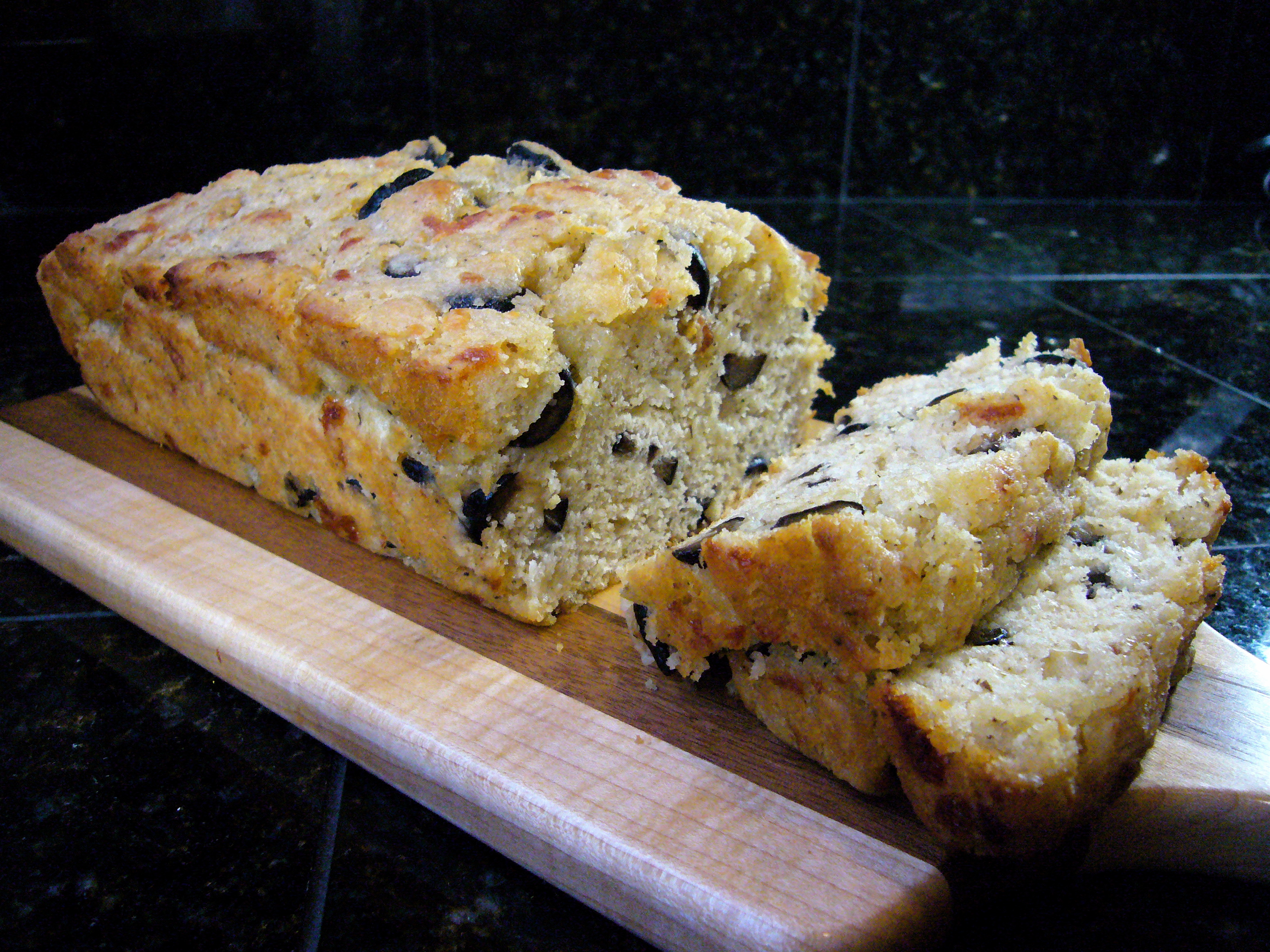
Not wanting to accept that I had been bested by a six-ingredient Beer Bread, I decided to start over. I was more diligent about reading the recipe through and decided to forgo the Tex-Mex route for an Italian-Herb type one. I made a few other changes to the batter and stuck the second Beer Bread loaf in the oven. With trepidation, I carefully sliced the second crusty loaf and put a piece into my mouth. Okay, this is what a successful Beer Bread is supposed to taste like – finger-licking good!

So here’s my adaptation of successful Beer Bread:

Ingredients:
*1 12 oz. can or bottle of beer. (I used a bottle of Foster’s the second time around).
*3 cups of sifted self-rising flour (If you don’t have self-rising flour at home, you can make it by sifting together 3 cups of all-purpose flour with 4-1/2 teaspoons baking powder and 1-1/2 teaspoons sea salt).
*1/3 cup of sugar (upped from 3 T in original recipe and I would consider increasing or decreasing the sugar amount depending on what ingredients you are adding to the basic batter).
*2 2.25 oz. cans of sliced olives
*1 teaspoon of Italian seasoning
1/2 cup Italian Blend Cheese
Butter, optional

Directions:
1. In a large bowl mix together the sugar and the sifted flour. Stir in the Italian seasoning. Make a well into the flour-sugar-seasoning mixture and slowly pour in the beer. Mix until just moistened. Add the cheese and olives. Mix until just combined. Do not over mix.
2. Pour into a greased 9″x5″ loaf pan. Let sit for a bit to let the yeast in the beer get settled (15-30 minutes).
3. Bake at 350 degrees for a total of 45 to 50 minutes. Test with a toothpick or cake tester after 45 minutes.
4. If desired at the halfway baking point, brush melted butter on the top of the bread and sprinkle with a little garlic salt. Repeat the brushing of butter and sprinkling of garlic salt when the loaf comes out of the oven.

Cheers and good luck!

Read Full Post »

« Newer Posts - Older Posts »