Feeds:
Posts
Comments

Posts Tagged ‘food’


My husband receives the same Father’s Day gift every year, yet he never complains about it and he always delights in it. More impressively, he thinks I planned his gift pretty darn well. So here’s what his perennial gift is – it’s our daughter! She was born on Father’s Day over two decades ago and ever since then, I just haven’t been able to top that gift!

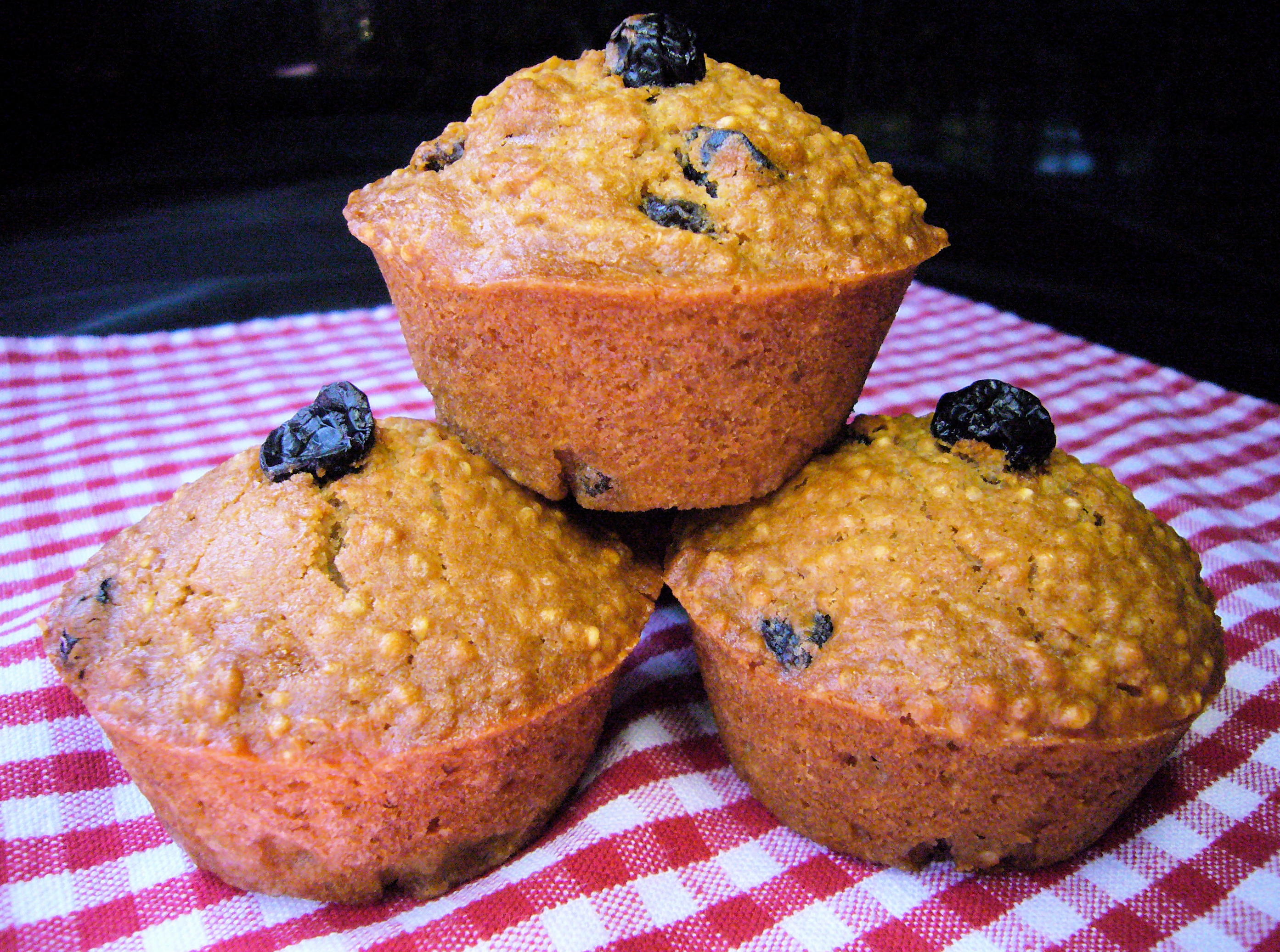
Since my hubby already knows what his gift is and since Father’s Day is just a few weeks away, I’ve started thinking about what items I’m going to serve him to make his brunch extra special. Wanting to serve him something healthy, yet tasty, I searched my infamous stacks of clippings and came across this Martha Stewart recipe for Quinoa Muffins. Interestingly, this recipe calls for using whole cooked quinoa seeds instead of quinoa flour.

Quinoa, as you will recall from my previous Quinoa Shrimp Salad post, is a tiny Peruvian seed that is a complete food and contains a balanced set of amino acids. It is also gluten-free (however, this muffin recipe is not). It’s a staple in my pantry and I continue to search for interesting quinoa recipes. Don’t forget to rinse quinoa with clear running water prior to cooking it to remove the bitter protective coating.

Martha Stewart’s Quinoa Muffins:

Ingredients
* 1 cup quinoa, rinsed
* 1/4 cup vegetable oil, such as safflower, plus more for pan
* 2 cups all-purpose flour, plus more for pan
* 3/4 cup packed dark-brown sugar
* 1 1/2 teaspoons baking powder
* 1 teaspoon salt
* 1/2 cup raisins**
* 3/4 cup whole milk
* 1 large egg
* 1 teaspoon pure vanilla extract

**I used 1/2 cup of mixed dried fruit: blueberries, currants, and orange-flavored craisins.

Directions
1. Preheat oven to 350 degrees. In a medium saucepan, bring quinoa and 1 cup water to a boil. Reduce to a simmer; cover, and cook until water has been absorbed and quinoa is tender, 11 to 13 minutes.
2. Meanwhile, brush a standard 12-cup muffin pan with oil; dust with flour, tapping out excess. In a medium bowl, whisk together flour, sugar, baking powder, salt, raisins, and 2 cups cooked quinoa; reserve any leftover quinoa for another use.
3. In a small bowl, whisk together oil, milk, egg, and vanilla. Add milk mixture to flour mixture, and stir just until combined; divide batter among prepared muffin cups.
4. Bake until toothpick inserted into the center of a muffin comes out clean, 25 to 30 minutes. Cool muffins in pan, 5 minutes; transfer to a wire rack to cool completely. Store in an airtight container up to 5 days.

Makes 12.

Linnell’s Note: Despite their chicken pox appearance, these muffins were surprisingly crunchy on the outside and very moist on the inside. It’s a good basic recipe that lends itself to many possible variations. I will be making these again and will try substituting organic blue agave sweetener for the sugar, a banana for the oil, and will add some cinnamon and nutmeg. I’ll let you know how my experiments turn out. Oh, and if I’m lucky and my husband is even luckier, we’ll get our food-loving second son to make his fabulous Crab Benedict for Father’s Day brunch!


Read Full Post »

It’s all about the food. Sometimes the best way to learn about a country and its culture is to learn about its food and its cooking traditions. Lucky for me, my daughter, who was a student in Greece for nearly five months, was not only my tour guide to the ancient sites, but also my culinary guide.

From dining in little tavernas that speckle the narrow side streets of Athens to eating fresh-caught fish off the coast of Santorini, I was introduced to the exquisite textures and flavors of Greek food. Sampling inch-long baby okra cooked in a light tomato and onion sauce, devouring tiny fried whitebait fish – head, tail, spine and all, and spreading pureed dried yellow peas on bread, were just some of the opportunities I used to discover the gastronomic resources available to the Greeks. I learned that some of the varieties of legumes we eat today are the same ones once eaten in ancient times.

And because the sun shines most of the year and very little rain falls, Greek tomatoes and peppers are exceptionally sweet. The freshness of Greek ingredients cannot be denied. Most foods are simply delicious because they are prepared with fresh and few ingredients. Very few over-processed foods ever made it to my table while I was in Greece.


Scorpion fish or grilled octopus, anyone? The seafood in Greece was as good as I had anticipated. The subtle lobster-like flavor of the Scorpion fish and the chewy texture of the fresh octopus were both delicious, but it was the fried calamari that really got my attention. Maybe it was the freshness of the squid or the very lightest dredging of flour or the addition of exactly the right amount of salt, but this Greek version of fried calamari was by far the best I’ve ever tasted!

The Greeks love their sweets. The sweet scent of freshly baked pastries found me following my nose into more than one local bakery. Even before I left home, my daughter had warned me about this temptation. I’d heard her stories about Bougatsa me Krema and was looking forward to my first taste. It did not disappoint. How could warm layers of buttery, thin phyllo sheets filled with creamy custard, and sprinkled with confectioner’s sugar and cinnamon be disappointing? Before the introduction of sugar, ancient Greeks used honey to sweeten their food. Thick, creamy, Greek yogurt and honey is a traditional treat and Greeks like to make sweet syrups from honey to pour over their cakes and fried sweets. Many Loukoumades or Greek donut balls coated in a honey-syrup called out to me.

Now back at home, I wanted to try my hand at making the memorable Bougatsa me Krema and I found a recipe online. Flakey, buttery and filled with custard – mine was pretty darn close to the deliciousness I experienced in Greece! I share this temptation with you.

Bougatsa me Krema or Creamy Custard Phyllo Pastry

-Courtesy of Nancy Gaifyllia of About.com with comments by Linnell-

Prep Time: 1 hour

Cook Time: 30 minutes

Total Time: 1 hour, 30 minutes

Ingredients:

* 4 1/4 cups of whole milk

* sliced peel of 1 lemon

* 1 1/4 cups of granulated sugar

* 3/4 cup of semolina (durum wheat flour which I found in my local grocery store)

* 4 eggs

* 1/4 teaspoon of vanilla extract

* 12 sheets of commercial phyllo dough

* 6 ounces of butter, melted

For the topping:

* confectioner’s sugar

* ground cinnamon

Preparation:

Warm the milk and lemon peel in a saucepan. Stir in semolina with a wooden spoon until the mixture is thoroughly blended and thickened. In a mixing bowl, beat the eggs, sugar, and vanilla until light and add to the pan, stirring over medium-low heat until it reaches a creamy custard consistency. Remove from heat, take out and discard lemon peel, and allow it to cool completely. Stir occasionally to keep the custard from forming a skin on top.

Preheat oven to 350°F (180°C).

Lightly brush a baking pan (13 X 9 X 2 or equivalent) with butter. Line the bottom of the pan with 8 sheets of phyllo, brushing each sheet well with the melted butter. Add the custard filling. Fold the excess phyllo that overlaps the pan in over the custard. Top with the remaining phyllo, brushing each with butter. Use a scissors to trim the top sheets to the size of the pan. Spray the top lightly with water and bake at 350°F (180°C) for 30-40 minutes, until the top is golden brown.

Remove from oven, sprinkle with confectioner’s sugar and cinnamon while hot, and serve warm.

Serving tip: In Greece, Bougatsa is cut with a pizza cutter.

Enjoy!

Adventures in Greece – to be continued . . .

Read Full Post »

With airline food what it is (or isn’t) these days, I always pack my own food to eat when I travel. I used to take peanut butter and jelly sandwiches because of their nonperishable nature until I came across a “no-peanut flight.” All passengers on that flight, including my family, were asked to not carry aboard any food that contained peanuts or peanut butter, because a passenger with a severe peanut allergy was going to board the plane. Most people seemed to comply, but many were not too happy, especially when after boarding, bags of opened peanuts were found in seat pockets all over the plane! Someone forgot to tell airline housekeeping about the “no-peanut flight!” That said, my favorite travel fare usually includes some of the following: sandwiches made without mayonnaise, apples, oranges, beef jerky, granola bars, homemade trail mix, and always homemade cookies.

These buckwheat cookies with cacao nibs are among my favorite cookies to eat whether I’m traveling or not. I like the texture and taste that the buckwheat flour lends to the cookies. Because buckwheat is low in gluten, it works like cornstarch does in shortbread cookies; it produces a more compact and crunchy-textured cookie. As for the cacao nibs, small pieces of roasted cocoa beans, they give these cookies a nice crunch and a hint of chocolate flavor. An added bonus of these nibs is that they won’t melt during your trip like chocolate chips normally would. I purchase cacao nibs at Whole Foods. I like to add chopped walnuts to this recipe because they add protein and fiber – good things to have when traveling!

There are many variations of this recipe on the internet, but most seem to originate from the cookbook Pure Dessert by Alice Medrich. Here’s my adaptation of Ms. Medrich’s recipe:

Ingredients:
1-1/4 cups all-purpose flour
3/4 cup buckwheat flour
1/2 lb. (2 sticks) unsalted butter, softened
2/3 cup sugar
1/4 tsp. salt
1/3 cup cacao nibs
1-1/2 tsp. pure vanilla extract
1/2 cup chopped walnuts, optional

Directions:
1. Whisk the all-purpose and buckwheat flours together in a medium bowl. Set aside.

2. In a medium bowl, with the back of a large spoon or with an electric mixer, beat the butter with the sugar and salt for about 1 minute, until smooth and creamy but not fluffy. Mix in the nibs and vanilla. Add the flours and the walnuts; mix just until incorporated. Scrape the dough into a mass and, if necessary, knead it with your hands a few times, just until smooth.

3. Form the dough into a 12 by 2-inch log. Wrap and refrigerate for at least 2 hours, or, preferably overnight.

4. Position the racks in the upper and lower thirds of the oven and preheat the oven to 350F degrees. Line the baking sheets with parchment paper.

5. Use a sharp knife to cut the cold dough log into 1/4-inch-thick slices. Place the cookies at least 1-1/2 inches apart on the baking sheets.

6. Bake until the cookie are just beginning to color at the edges, 12 to 14 minutes, rotating the baking sheets from top to bottom and front to back halfway through the baking. Cool the cookies in the pans on a rack, or slide the parchment liners carefully onto the rack to free up the pans. Let cool completely. The cookies are delicious fresh but even better the next day. They can be stored in an airtight container for at least one month.

Makes about 2 dozen cookies

Note: After the cookies have cooled completely, I wrap them individually in plastic wrap, put them in a Ziploc bag and freeze them. Just before I leave the house, I grab them out of the freezer, throw them in my carry-on bag, and they’re good to go!

Read Full Post »


With the temperatures warming up outside, it’s time to put on the sunscreen, drag out those tattered garden gloves, and sharpen those rusty shears. Picture how good it’s going to feel to reestablish those short sleeve and ankle sock tan lines while working up a sweat in the yard! Yeah, well maybe not today. Just got an iPad an hour ago and it’s redirecting my best intentions!

#1 – Time to Plant!
It’s that time of the year again when little vegetable plants nod in the breeze as we walk by them in the garden center. It can be confusing to know when the best time is to plant each type of vegetable, but The Garden Helper can help answer those types of questions. This site has a vegetable planting guide and tons of growing tips that are helpful to novice gardeners and experienced ones, as well. For someone like me, who could not live off the fat of the land, every little bit of advice helps!

#2 – Poisonous Plants
Last week I addressed foods that your pets should not eat. This week I’m focusing on plants that are potentially poisonous to your pets, cats and dogs specifically. The Humane Society of the United States has an extensive list that you can download as a PDF. Review the complete list so that you are familiar with plants in your yard that could be a potential problem. Here’s a short list of a few that are more commonly found in yards:

Azaleas – entire plant
Bird of Paradise – pods
Caladium – entire plant
Carolina Jessamine – flowers, leaves
Common Privet – leaves, berries
Daffodil – bulbs
Daphne – bark, berries, leaves
Day Lily & Easter Lily – entire plant is toxic to cats
Delphinium – entire plant, especially sprouts
English Ivy – entire plant especially leaves and berries
Foxglove – leaves
Iris – leaves, roots
Lantana – foliage
Laurels – leaves
Lupines – seeds, pods
Morning Glory – seeds, roots
Narcissus – bulbs
Oaks – shoots, leaves
Oleander – leaves
Philodendron – entire plant
Rhododendron – leaves
Sago Palm – entire plant, especially the seeds
Wisteria – pods, seeds

#3 – Eating at McDonald’s Around the World
My daughter recently told me about some meat-flavored potato chips she had in Egypt. That reminded me of this site which features McDonald’s cuisine from around the world. It’s interesting to see how McDonald’s caters to the local crowds.

#4 – The Snail’s Drink of Choice
I was reading a gardening article in my local newspaper and learned a few things about snails I had not known before. Did you know that snails can devour 30-40 times their weight, that they are hermaphrodites and thus can impregnate themselves or their partners, and last, but not least, that they love to drink beer? It seems snails are attracted to the yeast in beer, so go ahead and put out some shallow pans of beer so that those little guys can drown their troubles. But, beware, if you put out the wrong kind, they may not take the bait. According to research done at Colorado State University, snails tend to favor Kingsbury Malt, Budweiser, Bud Light, and Old Milwaukee brands. Light beer? Snails watch their weight?

#5 -Has Your Soul Bloomed, Yet?
If you’ve never been thrilled to the very edges of your soul by a flower in spring bloom, maybe your soul has never been in bloom.  ~Terri Guillemets

Today’s the last day of April which means tomorrow is May Day! Go ahead and dance around the maypole if you feel like it! Enjoy your weekend!

Read Full Post »

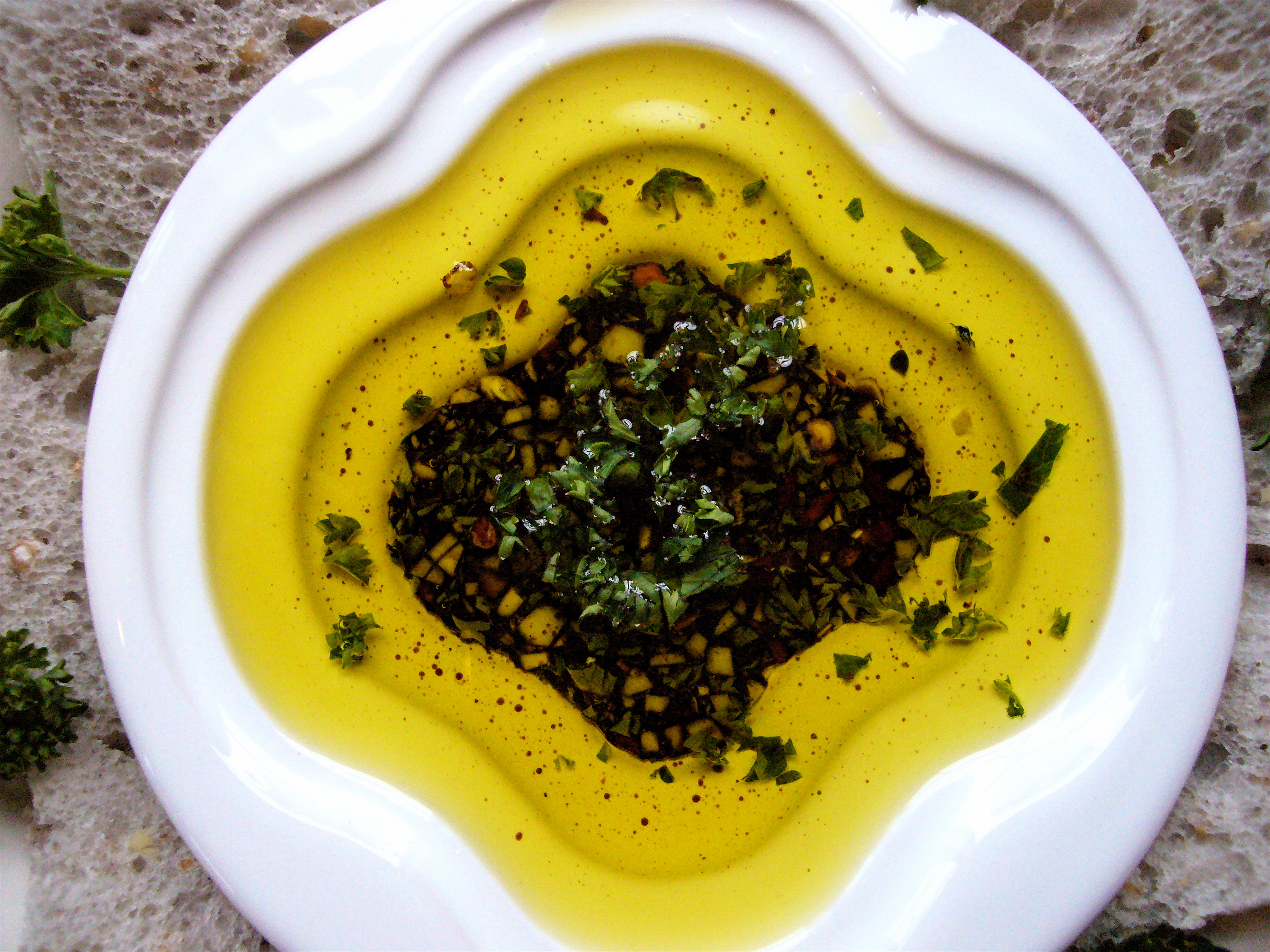
Sometimes it’s the simple things in life that are the best. What could be more simple than serving a warm loaf of rustic bread with a bowl of good quality olive oil and aged balsamic vinegar? Combine that with a hearty soup or a healthy salad and you have yourself a great meal. Of course, adding a bottle of wine to the menu would make the meal even more enjoyable! Here’s a simple recipe for a dipping oil very much like the type served in Piatti Restaurants.

Piatti-Style Dipping Oil:
1/4 teaspoon chopped parsley
1/4 teaspoon finely minced fresh garlic
Pinch of salt – to taste
Pinch of freshly ground pepper – to taste
Pinch of chili flakes
Balsamic vinegar, enough to cover bottom of small serving dish
Extra virgin olive oil, 4:1 olive oil to vinegar

Place ingredients in the order listed into a small serving dish or ramekin.

Makes enough for two people to dip bread with their meal.

Enjoy!

Read Full Post »

Continuing to “attack the stack,” I pulled a newspaper clipping out of a pile and looked at the date of May, 2008. “It’s time to check out this baby,” I thought to myself. Perusing the very short list of ingredients – only four – I noted that I had everything that was required. Nothing extraordinary on the list except for b-e-e-r! How great is it that the yeast in beer acts as a mild leavening agent, so we can use it in our baking?!

One of the comments provided by the newspaper recipe contributor was,”This bread is a canvas for you to flavor any way you choose.” Being a risk-taker in the kitchen, I decided to give my loaf a Tex-Mex type of flavor by adding a can of diced green chilies and some shredded cheddar cheese to the flour, sugar, salt, and beer. In my head I thought the flavors would meld together well.

When I sampled the final product of an inviting golden-brown-crusted loaf of bread, I was amazed. I was amazed at how awful it was! I had my volunteer food tester, aka my husband, taste it. I knew it was as nasty as it could get when my lover-of-everything-I-prepare husband said, “This is inedible!” It was bitter and had a slimy texture. So, on my Ick-Scale of one to ten this was a ten-ick. Wow, where did I go wrong?

Reviewing the recipe and the entire process, these are the possible errors I made:
1. The beer was a light beer and possibly did not have enough flavor and did not add enough body to the batter.

2. I accidentally added baking soda instead of baking powder to the flour mixture. The recipe stated that if you did not have self-rising flour you could add 3 teaspoons of baking powder to the flour to achieve the same results. Remember, I’ve mentioned this before, I am not beyond screwing up recipes by not reading them thoroughly.

3. My husband thinks the sliminess came from the diced green chilies, but I’m not sure if this is true. The recipe contributor had commented on friends adding chilies to their breads.

4. I should have gotten out two bottles of beer – one for me to drink first and then one to add to the bread!

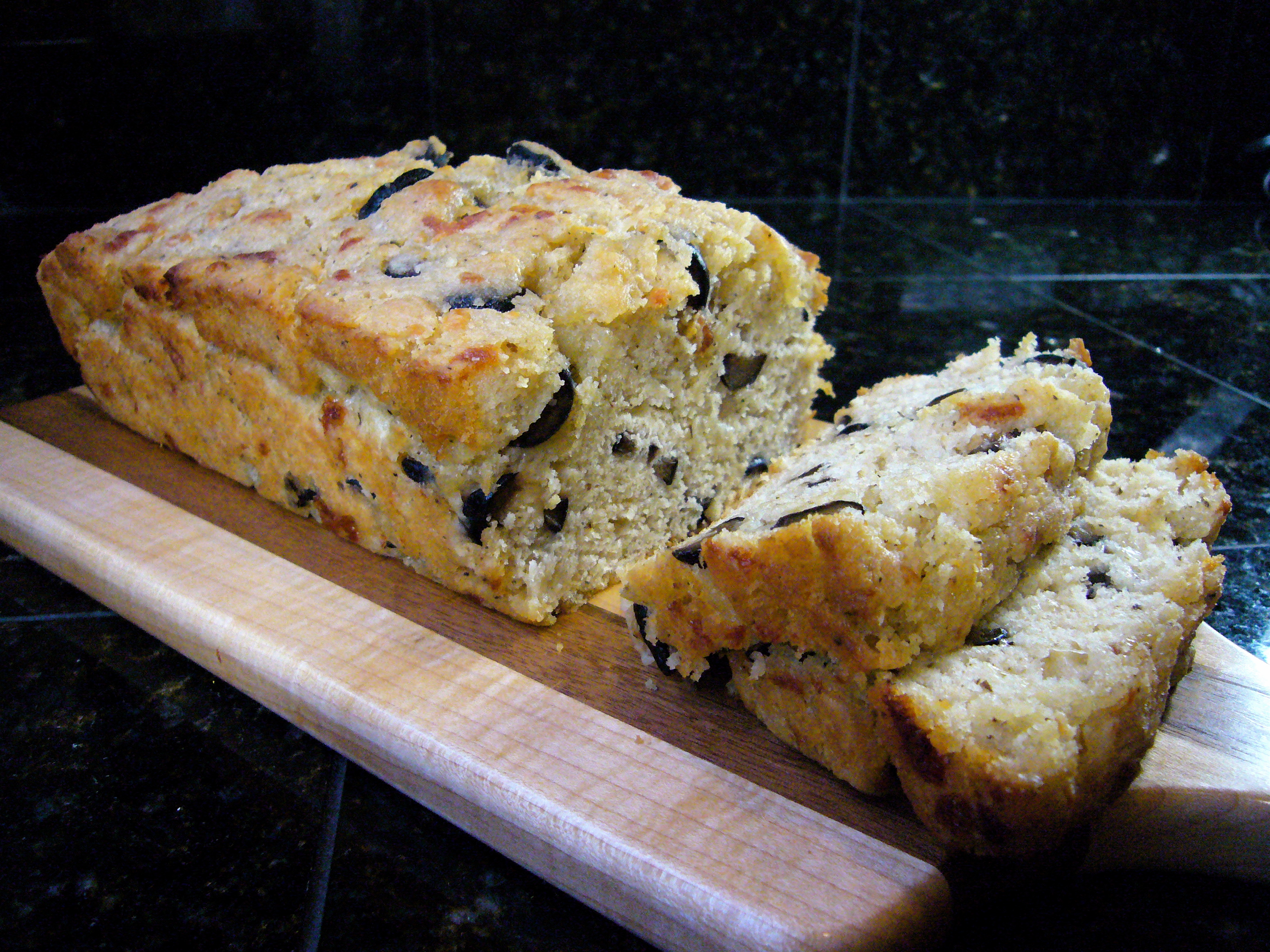
Not wanting to accept that I had been bested by a six-ingredient Beer Bread, I decided to start over. I was more diligent about reading the recipe through and decided to forgo the Tex-Mex route for an Italian-Herb type one. I made a few other changes to the batter and stuck the second Beer Bread loaf in the oven. With trepidation, I carefully sliced the second crusty loaf and put a piece into my mouth. Okay, this is what a successful Beer Bread is supposed to taste like – finger-licking good!

So here’s my adaptation of successful Beer Bread:

Ingredients:
*1 12 oz. can or bottle of beer. (I used a bottle of Foster’s the second time around).
*3 cups of sifted self-rising flour (If you don’t have self-rising flour at home, you can make it by sifting together 3 cups of all-purpose flour with 4-1/2 teaspoons baking powder and 1-1/2 teaspoons sea salt).
*1/3 cup of sugar (upped from 3 T in original recipe and I would consider increasing or decreasing the sugar amount depending on what ingredients you are adding to the basic batter).
*2 2.25 oz. cans of sliced olives
*1 teaspoon of Italian seasoning
1/2 cup Italian Blend Cheese
Butter, optional

Directions:
1. In a large bowl mix together the sugar and the sifted flour. Stir in the Italian seasoning. Make a well into the flour-sugar-seasoning mixture and slowly pour in the beer. Mix until just moistened. Add the cheese and olives. Mix until just combined. Do not over mix.
2. Pour into a greased 9″x5″ loaf pan. Let sit for a bit to let the yeast in the beer get settled (15-30 minutes).
3. Bake at 350 degrees for a total of 45 to 50 minutes. Test with a toothpick or cake tester after 45 minutes.
4. If desired at the halfway baking point, brush melted butter on the top of the bread and sprinkle with a little garlic salt. Repeat the brushing of butter and sprinkling of garlic salt when the loaf comes out of the oven.

Cheers and good luck!

Read Full Post »

Picture stacks of thinly sliced potatoes that have been roasted to perfection – the edges are crisp and brown, but the insides are still moist and tender. Do I have your attention, yet? Here is a no-fuss recipe that my children have always loved. It is a wonderful accompaniment to almost any entree, but goes particularly well with roasts – roast beef, roast chicken, and roast lamb to name a few. This recipe comes from a cookbook that I purchased at a library book sale. I needed another cookbook like I needed a hole in my head, but I rationalized that I could always pass it on to whichever child of mine displayed my pack-rat tendencies! Sorry, my darling Caitlin, but you seem to be the prime candidate right now. The Loaves and Fishes Party Cookbook by Anna and Sybille Pump has served me well through the years and I’m happy to pass this simple recipe onto my children and you.

My Adaptation of Baked Potato Slices:

1/2 cup olive oil

4 pounds (approximately 6 large) potatoes, peeled

1-1/2 teaspoons coarse Kosher salt (or season salt can be used for a tasty variation)

3/4 teaspoon freshly ground black pepper

Fresh herbs, optional

Preheat oven to 400 degrees.

Brush a 17 x 13-inch pan with 2 tablespoons of the olive oil. Make sure you are using a shallow baking pan, so that the potatoes roast instead of steam.

Slice the potatoes 1/8 inch thick. Place them in a mixing bowl, add the remaining olive oil, salt and pepper. Toss to evenly coat the potato slices. At this point I sometimes toss in some minced fresh herbs and toss again.

Place the potato slices, slightly overlapping, in rows on your baking pan.

Bake for 20 minutes, or until potatoes are crisp on the outside and tender on the inside.

Serves 8.

Anyway you slice them, these potatoes are good! Enjoy!

Read Full Post »

These are my signature Valentine’s Day cookies, but making them tends to be a love-hate type of situation for me. I love that decorating theses cookies brings out my inner Picasso, but because they require so much time and patience, I hate making them. I say “hate” lightly, though. I admit working with the icing can be challenging, but it is also therapeutic. Even though the cookies in the photo are all of the same design, I enjoy experimenting with the flow of the icing and creating new designs. No two are ever exactly the same and after sitting at my kitchen table for hours straight on end, they are always a labor of love.

This type of project is always more fun when shared with others. What about this? Why not host a Valentine’s Day cookie-decorating party for your friends? If you don’t feel like baking, order undecorated sugar cookies from your local bakery or grocery store’s bakery. The fun will be in the decorating and the time spent with friends.

Shortbread Valentine’s Day Cookies:
(Original recipe is from Martha Stewart)

1-1/2 C unsalted butter, softened
¾ C sugar
1 tsp vanilla extract
2 C unbleached all-purpose flour
1 C cornstarch
Icing recipe below

Cream together the butter and sugar in a large bowl. Stir in the vanilla.

Sift together the flour and cornstarch and then stir this into the creamed mixture. Place the dough on a sheet of plastic wrap and form the dough into a round disc. Wrap the dough and chill it for at least 2 hours.

Preheat oven to 325 degrees. Line the baking sheets with parchment paper. Roll out the dough on a lightly floured surface and cut out heart shapes with a cookie cutter. Bake for 5-8 minutes. These cookies remain a pale color. Carefully remove from baking sheets and cool on racks. Spread on icing and let icing dry until shell forms. Store in an airtight container.

Makes about four dozen cookies.

Icing:
3-1/2 C confectioners’ sugar, sifted
3 large egg whites, lightly beaten
½ tsp fresh lemon juice
Food coloring (I use Wilton’s gel icing colors)

In a medium bowl, combine the confectioners’ sugar, egg whites, and lemon juice. Blend until smooth.

Divide icing into small bowls. Add food colors. Blend the colors thoroughly. Make in small batches as necessary. Apply icing to cookies using small brushes. Stir individual bowls occasionally to prevent icing from hardening.

Makes enough for four dozen cookies.

Happy Valentine’s Day!

Read Full Post »

Preparing home cooked meals can be challenging during the holiday season. There’s so much to do and so little time. Isn’t it just easier to order out or grab some fast food these days? Well, what about this – get out that crock pot of yours and cook dinner while you shop or wrap? It’s multitasking at it’s best!

Here’s an easy recipe for chicken cooked in a crock pot. It’s called Linnell’s No-Fuss Chicken. I don’t remember the origins of this recipe, so I guessing that it’s probably a conglomeration of recipes that I adapted. It’s certainly not a gourmet dish, but it’s tasty and easy!

2/3 C flour
1 tsp rubbed sage
1 tsp dried basil
1 tsp seasoned salt
1 chicken (2.5-3 lbs.), cut up
3 T butter
olive oil
1 can cream of chicken soup
1 envelope Lipton’s Onion Soup
Approximately 2 cups fat free half & half or chicken broth

Directions: In a shallow bowl, combine flour, sage, basil, and seasoned salt. Rinse and pat chicken dry. Cut chicken into pieces. Coat chicken pieces with flour mixture. In a large skillet, melt butter and a couple of swigs of olive oil. Brown chicken on all sides.

Spray crock liner with a vegetable spray and put browned pieces in the crock pot with largest pieces on the bottom. In a medium-sized mixing bowl, stir together the cream of chicken soup and the onion soup. Stir in the fat free half & half or the chicken broth. Pour the soup mixture over chicken. Cover and cook on high for 2 to 2.5 hours until the juices run clear.

Serve on a bed of rice or noodles.

Note: This is a clean out your vegetable bin recipe. Any vegetables such as carrots, bell peppers, zucchini, celery, broccoli, onions, mushrooms etc. can be added. Wash, cut, and place veggies on top of the meat before cooking.

Go ahead and go shopping for a couple of hours. Dinner will be waiting for you when you return home!

Read Full Post »

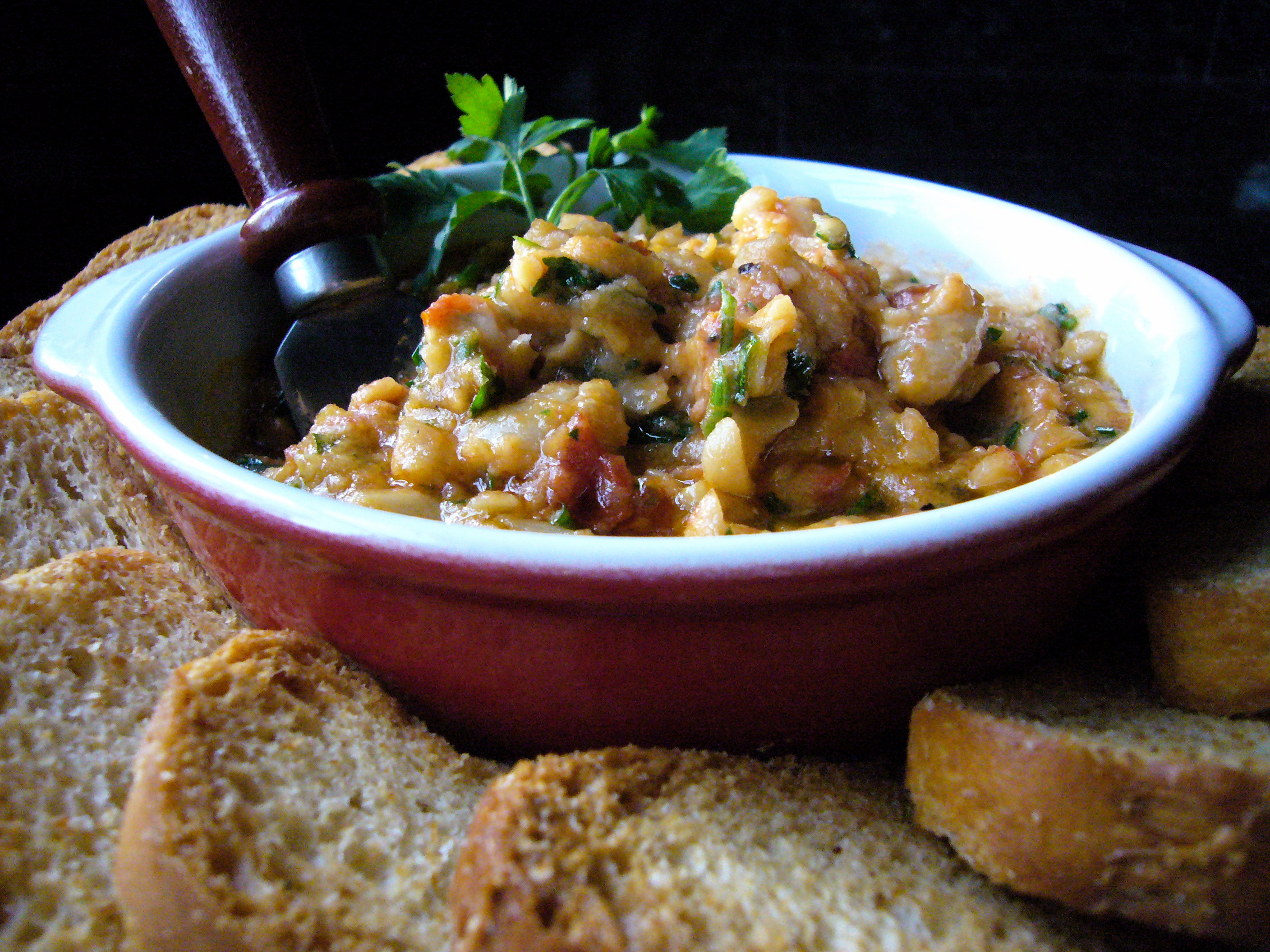
‘Tis the season to be quick and speedy. With time at a premium, but a high desire to entertain, why not make life easier? That’s what I did when I needed a tasty appetizer in a hurry. I simply reached into my pantry and pulled out a can of cannellini beans. Cannellini beans are also called white kidney beans and like other beans, they are high high in protein and fiber and low in fat. Cannellini beans are popular in Tuscan dishes and other Italian cuisine.

Here’s a bean spread recipe that requires few ingredients and is a hearty appetizer when served with toasted baguette slices or pita chips. During the summer when tomatoes are abundant and flavorful, I gently fold in some fresh diced tomatoes after the mixture has been pulsed in the food processor. This is in addition to the sauteed ones. If the spread needs to be thinned, I add additional olive oil like the recipe states, but I use Meyer lemon infused olive oil for a brighter taste.

Cannellini Bean Spread Recipe

This is an adaptation of a recipe from Chef Kurtis Jantz of Trump International Beach Resort in Miami.

4 ounces olive oil, good quality
2 cloves garlic, minced
2 roma tomatoes, small, diced
15.5-ounce can cannellini beans, rinsed in cold water and drained
1/2 ounce Italian parsley leaves, rough chopped
Sea salt to taste
Black pepper, fresh-ground, to taste

In a medium, tall-sided sauce pot, add olive oil and heat on high until just below the smoking point. Remove from the heat and carefully add minced garlic. As soon as you smell the aromatics of the garlic (you do not want the garlic to get overly brown), add the tomatoes and stir well. Return pot to the stove over medium heat and add cannellini beans. Simmer for 10 minutes stirring occasionally. Season to taste with salt and pepper. Remove from stove, and let cool slightly. Fold in parsley. Using blender or food processor, pulse blend just until the beans are broken up but not pureed, leaving some texture. You can add more olive oil to the mixture if you like it thinner. Cool to room temperature and serve.

Read Full Post »

« Newer Posts - Older Posts »